


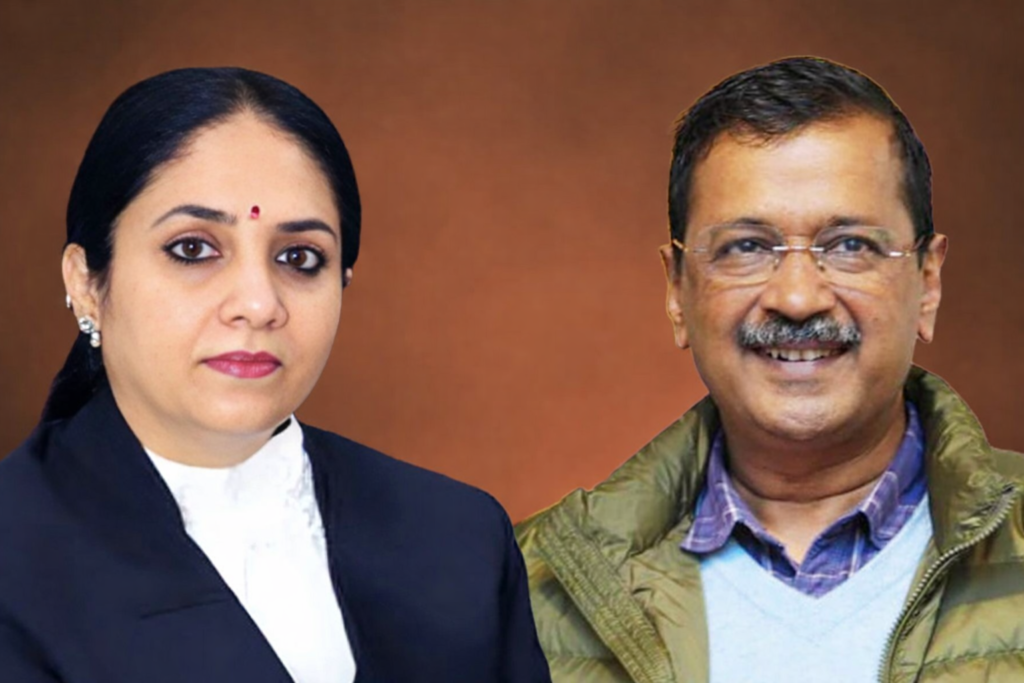
In a rare and dramatic courtroom moment on 13-14 April 2026, former Delhi Chief Minister and AAP national convenor Arvind Kejriwal personally argued before the Delhi High Court, seeking the recusal of Justice Swarana Kanta Sharma from hearing the CBI’s appeal in the Delhi Excise Policy case. What followed was a high-stakes exchange that quickly went viral—only for the High Court itself to direct the Delhi Police to remove all unauthorized videos of the proceedings from social media platforms.
The episode has sparked intense debate about judicial recusal, perceived bias in politically sensitive cases, and the limits of courtroom transparency in the digital age.
What Did Kejriwal Say in Court?
Appearing in person, Kejriwal laid out what he described as a “real, grave and reasonable apprehension” of not receiving a fair hearing. He listed 10 specific grounds, drawing on Supreme Court precedents.
Key points from Kejriwal’s arguments:
- He claimed the court had “almost declared me guilty, almost declared me corrupt. Only the sentence was left to be pronounced.”
- He contrasted the trial court’s detailed discharge order (after examining over 40,000 pages of evidence) with the High Court’s observation on 9 March 2026 that the trial court’s order was “prima facie erroneous” after what he called a very brief hearing.
- He alleged that “whatever CBI and ED argue is accepted” by Justice Sharma.
- He pointed to the judge’s attendance at programmes organized by the Akhil Bharatiya Adhivakta Parishad (ABAP), which he described as following an ideology “opposite to his party’s ideology.”
- In a follow-up affidavit filed on 14 April, Kejriwal raised a fresh “conflict of interest” angle: Justice Sharma’s son and daughter are impanelled as Central Government panel counsel and receive work allocated by Solicitor General Tushar Mehta, who is representing the CBI in this very matter.
Kejriwal repeatedly clarified that he was not alleging actual bias or improper motive, only that a fair-minded litigant could reasonably apprehend that justice may not appear to be done.
What is Judicial Recusal and What Does Indian Law Say?
Judicial Recusal (also called disqualification) is the voluntary withdrawal of a judge from hearing a particular case due to a real or perceived conflict of interest, bias, or circumstances that could reasonably raise doubts about their impartiality. It is rooted in the fundamental principle of natural justice: “Nemo judex in causa sua” — No one should be a judge in their own cause. The objective is to protect not just actual fairness but also the appearance of fairness, thereby maintaining public confidence in the judiciary.
India does not have a specific statute governing recusal for the High Courts and the Supreme Court. It is guided by:
- Constitutional principles under Articles 14 (equality) and 21 (right to life and personal liberty, which includes fair trial).
- Judicial precedents developed by the Supreme Court.
What Did Justice Swarana Kanta Sharma Say?
Justice Sharma heard Kejriwal’s detailed arguments and reserved her order on the recusal plea (along with similar applications by other accused). As the hearing ended, she made two notable observations:
- Complimenting Kejriwal’s advocacy: “You argued well and have the potential to become a lawyer.”
- Reflecting on the plea: “I learnt a lot about recusal jurisprudence. For the first time in my life, someone has asked me to recuse. I learnt a lot. I hope I will give a good judgment.”
The CBI, represented by Solicitor General Tushar Mehta, opposed the recusal and is expected to file written submissions on the fresh affidavit.
Delhi High Court Orders Removal of Viral Videos
Within days, clips of the proceedings spread rapidly online. On 15-16 April 2026, the Delhi High Court directed the Delhi Police to remove all unauthorized video recordings, citing violations of the Delhi High Court Rules for Video Conferencing and the Electronic Evidence and Video Recording Conference Rules, 2025. The Registrar General emphasized that recording or publishing court proceedings without permission is strictly prohibited. The court has initiated action against those who uploaded the clips.
Who Is Justice Swarana Kanta Sharma?
Justice Swarana Kanta Sharma is a permanent judge of the Delhi High Court, elevated on 28 March 2022. She has had a remarkable career:
- Education: BA (Hons) English Literature ; LLB ; LLM ; PhD in Judicial Education.
- Early Rise: Became a Magistrate at 24 and a Sessions Judge at 35.
- Key Roles: Presided over Family Court, Mahila Court, Special CBI Court, and served as Principal District & Sessions Judge. She is also a trained judicial mediator and has authored five books on women’s rights and judicial education.
What Do Her Children Do?
Kejriwal’s additional affidavit highlighted:
- Son – Ishaan Sharma: Empanelled as Group ‘A’ Panel Counsel for the Supreme Court and Delhi High Court. He has reportedly been assigned thousands of Central Government cases.
- Daughter – Shambhavi Sharma: Empanelled as Government Pleader for Delhi High Court and Group ‘C’ Panel Counsel for the Supreme Court.
Kejriwal argued that the Solicitor General’s role in allocating such briefs creates an appearance of conflict in a case where the SG himself appears for the CBI.
Track Record and the Bias Question
Justice Sharma’s bench has handled multiple CBI/ED matters in the excise policy case, often favouring the agencies’ submissions. Several of her orders have been modified or stayed by the Supreme Court. AAP supporters cite prior strong observations, attendance at ABAP events, and the family’s government panel links as creating a reasonable apprehension of bias.
Defenders argue that routine professional empanelments and attendance at legal forums do not amount to disqualification, and no actual bias has been proven.
What Lies Ahead?
Justice Sharma has reserved her order on the recusal applications. The outcome will be significant not just for the excise policy case but for broader debates on judicial recusal norms, courtroom transparency, and maintaining public trust in the judiciary amid intense political scrutiny.