Bangladesh Election 2026- A Landslide for BNP and the Ripple Effects on India
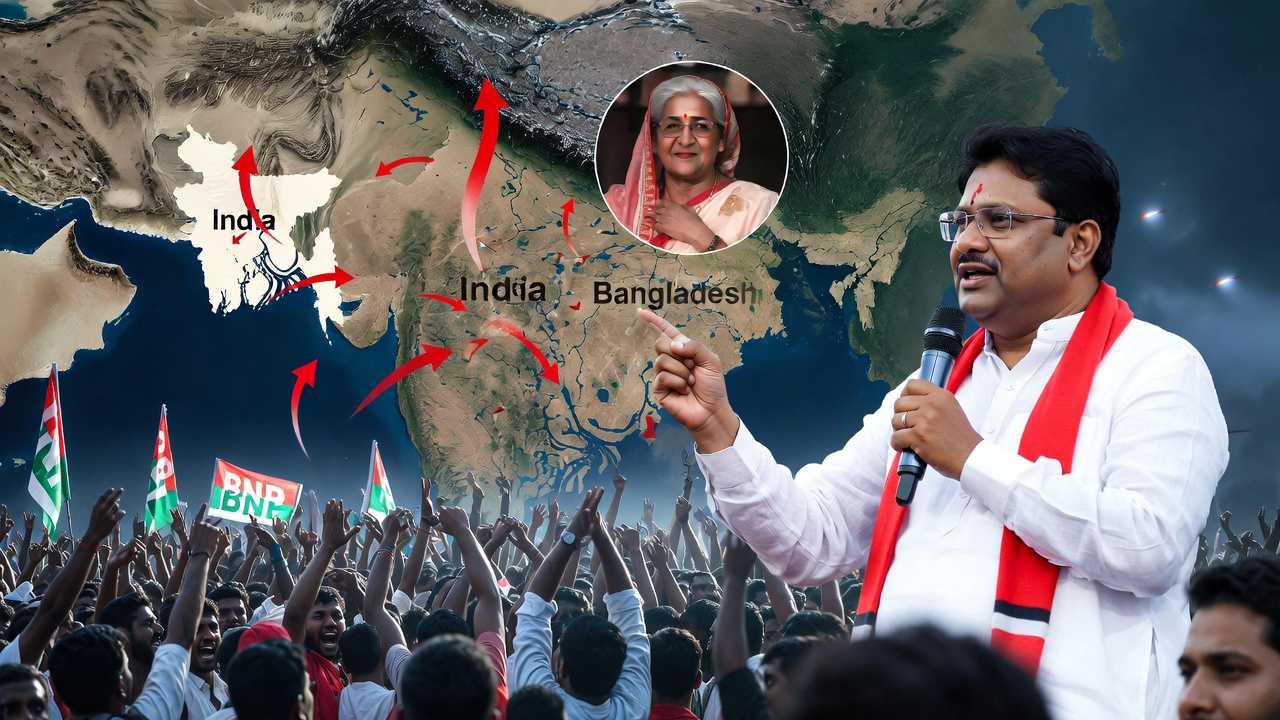
The political landscape of South Asia has undergone a seismic shift following Bangladesh’s 2026 general election. Held on February 12, 2026, this was the first national poll since the dramatic 2024 student-led uprising that toppled Sheikh Hasina’s long-standing Awami League government. The Bangladesh Nationalist Party (BNP), led by Tarique Rahman, emerged victorious with a commanding majority, securing between 209 and 212 seats in the 300-member Jatiya Sangsad (parliament). This victory marks the BNP’s return to power after nearly two decades in the wilderness, positioning Rahman, son of former Prime Minister Khaleda Zia, as the next prime minister. Meanwhile, the Islamist Jamaat-e-Islami party made significant gains, capturing around 68 to 77 seats and establishing itself as the primary opposition. Other smaller parties, like the National Citizens Party (NCP), picked up a handful of seats, with independents and others filling the rest.
This election, overseen by an interim government headed by Nobel laureate Muhammad Yunus, saw a voter turnout of approximately 59.4%, a notable increase from the 42% in the controversial 2024 polls under Hasina. The Awami League was barred from participating, and Hasina herself remains in exile in India, facing convictions for crimes against humanity related to her crackdown on protesters. The Election Commission swiftly announced the results on February 13, with local media outlets like Ekattor TV and Jamuna TV projecting the BNP’s landslide early in the counting process. International observers hailed the vote as largely peaceful and competitive, a stark contrast to the boycotted and violence-plagued elections of recent years.
To understand the significance of this outcome, it’s essential to delve into the historical context. Bangladesh’s politics have long been dominated by a bitter rivalry between the Awami League and the BNP, often referred to as the “battle of the begums” due to the leadership of Hasina and Zia. The 2024 uprising, sparked by student protests against job quotas and escalating into a broader anti-government movement, forced Hasina to flee to India after 15 years in power. Her regime was accused of authoritarianism, electoral fraud, and human rights abuses, including the deaths of over 1,400 protesters. The interim Yunus administration promised reforms, including a referendum on constitutional changes like term limits for prime ministers and increased women’s representation, which passed alongside the election.
Tarique Rahman, who had been in exile in London since 2008, facing corruption charges he claims were politically motivated, returned to Bangladesh in late 2025 to lead the BNP’s campaign. His party’s platform emphasized anti-corruption, economic recovery, and democratic restoration, resonating with voters weary of Hasina’s iron-fisted rule. The BNP’s victory is seen as a mandate for change, but it also highlights the enduring appeal of mainstream, centrist politics over radical alternatives. Women voters, a crucial demographic in Bangladesh’s garment industry-driven economy, appear to have played a pivotal role in rejecting the more conservative Jamaat-e-Islami, which positioned itself as an “untested” force for reform but carries a legacy of opposing Bangladesh’s 1971 independence from Pakistan.
Jamaat’s strong showing, its best ever, nearly doubling its previous high of 18 seats, signals a worrying rise in Islamist influence. The party, allied with the NCP, campaigned on anti-corruption and pro-democracy themes but has historical ties to radical elements and anti-India sentiments. Analysts note that while Jamaat didn’t capture power, its role as an opposition party could push the BNP toward harder stances on issues such as religious minorities and foreign policy. Seven women were elected to parliament, six from the BNP, underscoring a modest step toward gender representation in a male-dominated political sphere.
For India, Bangladesh’s closest neighbor, these results carry profound implications. Under Sheikh Hasina, bilateral ties flourished, with cooperation on border security, trade, and counter-terrorism reaching unprecedented levels. India exported 35% of its cotton to Bangladesh, supporting its vital textile sector, which accounts for over 80% of Bangladesh’s exports and employs millions. Hasina’s government cracked down on anti-India insurgent groups such as ULFA, and economic initiatives, such as the India-Bangladesh Friendship Pipeline, bolstered energy ties. However, the post-2024 interim period saw relations sour: anti-India sentiments surged, Hindu minorities faced violence, and Dhaka accused New Delhi of interference.
The BNP’s ascent introduces uncertainty. Historically, during the BNP’s last tenure (2001-2006) in coalition with Jamaat, relations with India were strained. Allegations surfaced of BNP leaders, including Tarique Rahman, involvement in smuggling arms to Indian separatists in Assam. The party has denounced Sheikh Mujibur Rahman’s legacy, potentially paving the way for warmer ties with Pakistan, Bangladesh’s former colonial master. This could form an axis involving China, which already has deep investments in Bangladesh through the Belt and Road Initiative, including ports and infrastructure projects.
A key flashpoint is Sheikh Hasina’s exile in India. The BNP has repeatedly demanded her extradition, linking it to improved bilateral relations. Dhaka’s refusal to hand her over—despite convictions for war crimes—has already strained ties, leading to disruptions in visa services and even a boycott of IPL broadcasts. With BNP in power, pressure will intensify, possibly conditioning cooperation on issues like the Teesta water-sharing agreement or border management on Hasina’s return. Indian Prime Minister Narendra Modi was quick to congratulate Rahman, reaffirming India’s commitment to a “democratic, progressive, and inclusive Bangladesh.” In response, the BNP thanked India and expressed hopes for stronger ties, but analysts warn of domestic pressures from Jamaat pushing for tougher stances.
Security concerns loom large. Bangladesh’s economic woes—exacerbated by the 2024 unrest, with losses estimated at Rs 2 lakh crore, inflation at 9%, and growth forecasts slashed to 4.6% for 2026—could fuel instability. Illegal migration across the porous border has been a hot-button issue in Indian states like West Bengal and Assam, where upcoming elections in 2026 will amplify rhetoric on infiltration. Reports of anti-Hindu violence post-Hasina have heightened fears for minorities, with India quietly evacuating diplomats’ families amid security risks. A Jamaat-influenced opposition could radicalize elements, potentially turning Bangladesh into a staging ground for ISI-backed militants, echoing pre-Hasina eras.
Economically, the election could disrupt ongoing projects. Adani’s power supply deal has been suspended, and coal plants like Barakpuria are offline, causing blackouts in northern Bangladesh. Cricket ties, a cultural bridge, are strained: Bangladesh faces potential ICC suspension for refusing to play T20 World Cup matches in India. Yet, opportunities exist. India’s early outreach to Rahman could foster pragmatic cooperation, focusing on trade (bilateral trade volume exceeds $12 billion) and connectivity through projects such as the Akhaura-Agartala rail link.
Geopolitically, the results challenge India’s regional influence. The U.S., concerned about China’s growing footprint, has engaged Dhaka on defense alternatives, while Pakistan and China vie for sway. A pro-Pakistan BNP could tilt the balance, complicating India’s Act East policy and maritime security in the Bay of Bengal. However, the rejection of Jamaat’s extremism suggests Bangladeshis prefer stability, aligning with India’s interest in a secular neighbor.
In conclusion, the 2026 Bangladesh election heralds a new chapter of uncertainty for India-Bangladesh relations. While the BNP’s victory offers a chance to reset ties beyond the Hasina era, Jamaat’s rise and historical animosities pose risks to security, economy, and diplomacy. India must navigate this delicately, balancing extradition demands with minority protections, leveraging economic interdependence, and countering external influences from China and Pakistan. As Rahman forms his government by Sunday, February 15, the coming months will test whether this electoral shift strengthens South Asian stability or sows seeds of discord. For India, proactive engagement is key to ensuring that Bangladesh remains a partner, not a problem.