DAC Approves Mega Acquisitions Including 114 Rafale Fighters
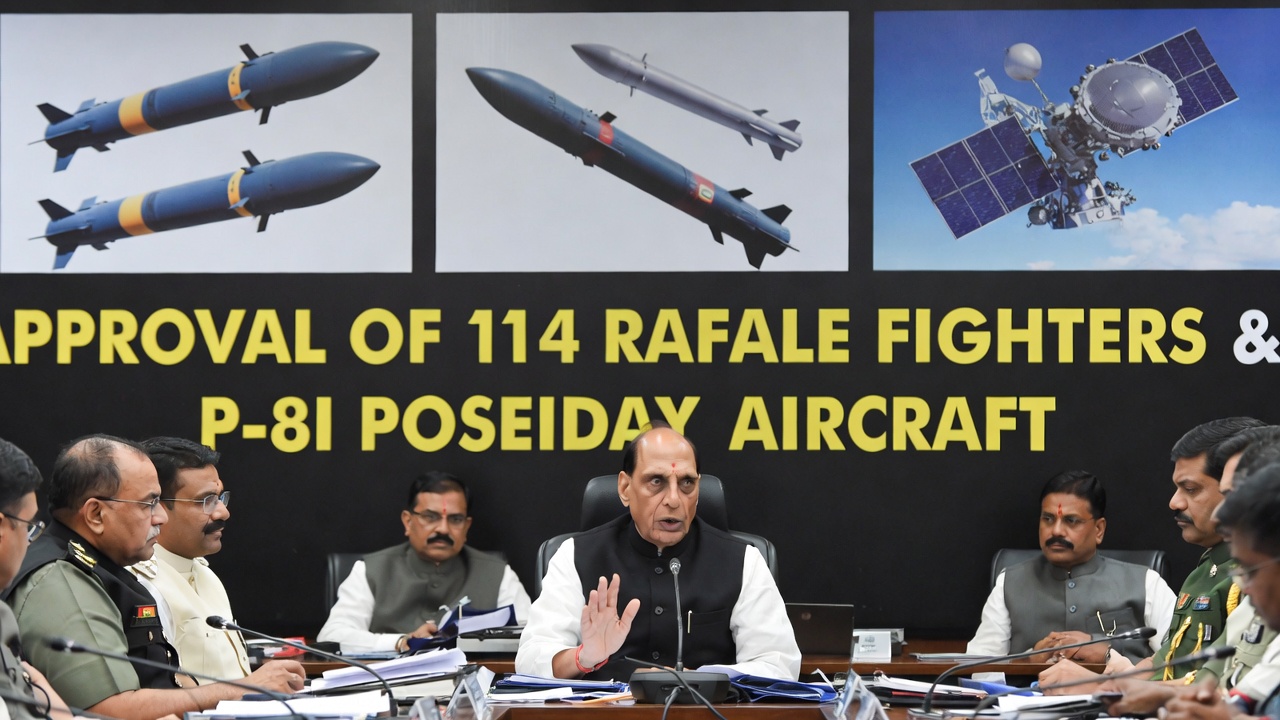
In a landmark decision that underscores India’s commitment to modernizing its armed forces amid evolving regional security challenges, the Defence Acquisition Council (DAC), chaired by Defence Minister Rajnath Singh, has approved several high-value procurement proposals. This move comes at a critical juncture as India seeks to enhance its air dominance, maritime surveillance, and overall deterrence posture. The approvals, totaling approximately Rs 3.60 lakh crore, include the acquisition of 114 Rafale multi-role fighter jets, 6 additional P-8I Poseidon maritime patrol aircraft, combat missiles, and an air-ship-based high-altitude pseudo-satellite (AS-HAPS), among other items. This blog delves into the details of this significant development, with a particular focus on the Rafale and P-8I Poseidon platforms, exploring their technical specifications, strategic importance, and the broader implications for India’s defense ecosystem.
The DAC Meeting and Key Approvals
On February 12, 2026, the DAC accorded Acceptance of Necessity (AoN) for multiple capital acquisition proposals to bolster the operational readiness of the Indian Armed Forces. The meeting, held under the leadership of Defence Minister Rajnath Singh, cleared projects worth Rs 3.60 lakh crore, marking one of the largest defense procurement packages in recent years. This “mother of all defense deals” is expected to significantly enhance India’s capabilities in air superiority, maritime domain awareness, and persistent surveillance.
The centerpiece of the approvals is the procurement of 114 Rafale fighter jets from France’s Dassault Aviation, estimated at Rs 3.25 lakh crore. Additionally, the DAC approved six more Boeing P-8I Poseidon aircraft for the Indian Navy, combat missiles for the Indian Air Force (IAF), and the AS-HAPS system for high-altitude intelligence, surveillance, and reconnaissance (ISR). Other clearances include anti-tank mines (Vibhav), overhaul of armored vehicles like T-72 tanks and BMP-II infantry combat vehicles, 4 MW marine gas turbine generators under the Make-I category, and electro-optical/infra-red systems for the Indian Coast Guard’s Dornier aircraft.
This decision aligns with India’s push for self-reliance in defense manufacturing, as a majority of the Rafale jets will be produced domestically in collaboration with Hindustan Aeronautics Limited (HAL). The approvals come just ahead of French President Emmanuel Macron’s visit to India, potentially paving the way for swift negotiations and contract finalization.
Rafale Fighter Jet
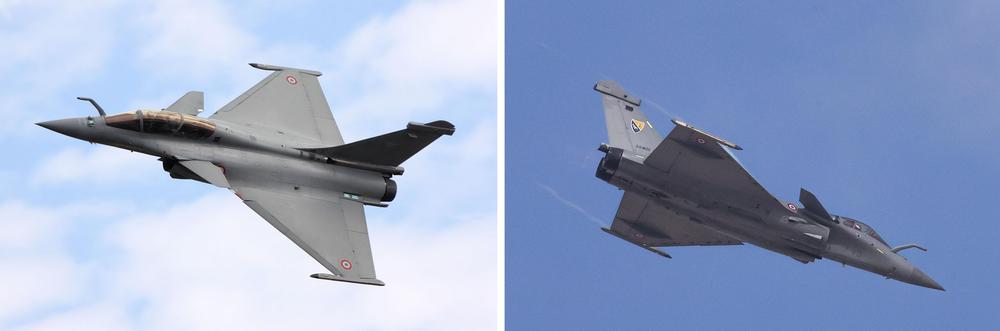
The Rafale, a fourth-generation-plus multi-role fighter aircraft developed by Dassault Aviation, has been a game-changer for air forces worldwide since its introduction in the early 2000s. For India, this acquisition builds on the existing fleet of 36 Rafales, which were procured in a 2016 government-to-government deal worth Rs 59,000 crore and fully delivered by 2022. The new batch of 114 jets will raise India’s total Rafale count to 150, significantly addressing the IAF’s depleting squadron strength, which has fallen below the authorized 42 squadrons due to the retirement of older aircraft such as the MiG-21.
Technical Specifications and Capabilities
The Rafale is a twin-engine, canard-delta wing fighter designed for versatility across air-to-air, air-to-ground, and air-to-sea missions. It measures 15.27 meters in length with a wingspan of 10.80 meters and a maximum takeoff weight of 24,500 kg. Powered by two Snecma M88-2 turbofan engines, each producing 50 kN of dry thrust and 75 kN with afterburner, the Rafale achieves a top speed of Mach 1.8 (around 1,912 km/h) at high altitude and a service ceiling of 15,240 meters. Its range exceeds 3,700 km with external fuel tanks, making it ideal for long-range strikes.
One of the Rafale’s standout features is its advanced avionics suite, including the Thales RBE2 active electronically scanned array (AESA) radar, which provides superior detection and tracking of multiple targets up to 200 km away. The Spectra electronic warfare system offers integrated defensive aids, including radar warning receivers, missile approach warners, and jamming capabilities, enhancing survivability in contested environments. The aircraft can carry a diverse payload of up to 9,500 kg across 14 hardpoints, including Mica air-to-air missiles, Hammer precision-guided bombs, Scalp cruise missiles, and Exocet anti-ship missiles. For India-specific enhancements, the Rafales will be integrated with indigenous systems such as the Astra beyond-visual-range missile and the Uttam AESA radar in future upgrades.
In terms of stealth and maneuverability, the Rafale incorporates semi-stealth features such as radar-absorbent materials and a reduced radar cross-section, though it’s not a full fifth-generation stealth fighter. Its fly-by-wire controls and thrust vectoring enable supermaneuverability, allowing it to perform tight turns and high-alpha maneuvers crucial in dogfights. The cockpit features a glass design with head-up displays (HUD) and helmet-mounted sights, providing pilots with real-time situational awareness.
Strategic Importance for India
The Rafale’s induction into the IAF has already proven its worth. During the 2019 Balakot airstrikes, Rafales demonstrated precision strike capabilities, earning praise from IAF leadership as the “Operation Sindoor hero.” With tensions along the Line of Actual Control (LAC) with China and ongoing threats from Pakistan, the additional 114 jets will enable the IAF to undertake air dominance roles, long-range offensive strikes, and deep interdiction missions. This is particularly vital, as China’s People’s Liberation Army Air Force (PLAAF) fields advanced fighters like the J-20, which necessitates a qualitative edge for India.
The deal emphasizes indigenization: Out of the 114 jets, approximately 18-20 will be delivered in fly-away condition from France, while the remaining 94-96 will be manufactured in India with up to 50-60% indigenous content. This collaboration with Dassault and HAL will transfer critical technologies, boosting India’s aerospace industry and aligning with the Atmanirbhar Bharat initiative. It also creates jobs and fosters partnerships in areas like engine maintenance, avionics, and weapon systems.
Challenges and Criticisms
Despite its prowess, the Rafale program has faced scrutiny. The original Medium Multi-Role Combat Aircraft (MMRCA) tender in 2007, which selected the Rafale but was scrapped in 2015 due to cost overruns and technology transfer issues, sparked political controversy. The current deal, structured as a government-to-government agreement, aims to avoid such pitfalls through streamlined negotiations. However, escalating costs—driven by inflation, customization, and offsets—remain a concern, with the per-unit price potentially around Rs 2,850 crore.
Moreover, while the Rafale bridges the gap, India’s long-term needs include indigenous platforms like the Advanced Medium Combat Aircraft (AMCA), expected in the mid-2030s. Until then, the Rafale will serve as a force multiplier, integrating with existing assets like the Su-30MKI and Tejas.
Exploring the P-8I Poseidon Maritime Patrol Aircraft
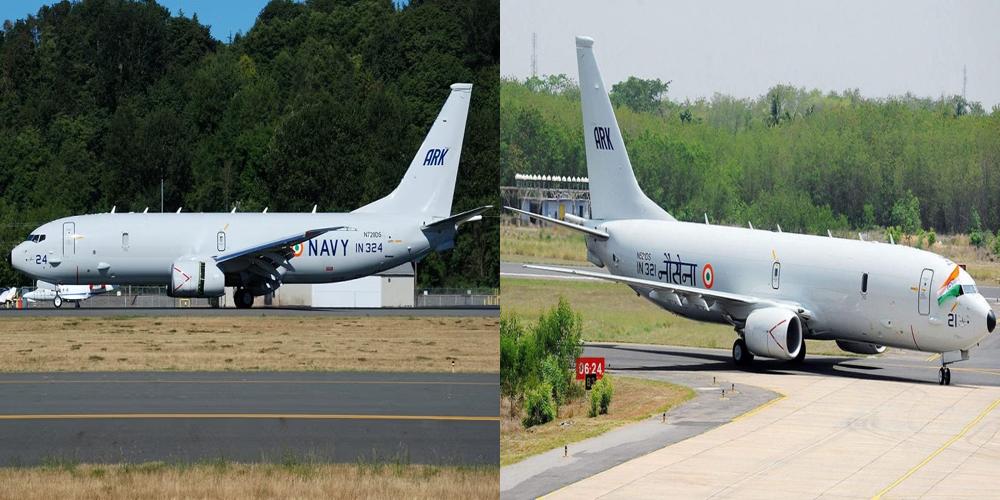
The Boeing P-8I Poseidon, the Indian variant of the U.S. Navy’s P-8A, is a long-range maritime reconnaissance and anti-submarine warfare (ASW) aircraft that has become indispensable for naval operations. India, with its vast coastline of over 7,500 km and strategic interests in the Indian Ocean Region (IOR), already operates 12 P-8Is, inducted between 2013 and 2022 under two previous deals worth over $3 billion. The DAC’s approval for six additional units will expand the fleet to 18, enhancing surveillance against submarine threats from adversaries such as China and Pakistan.
Technical Specifications and Capabilities
Based on the Boeing 737-800 airliner, the P-8I measures 39.47 meters in length, has a wingspan of 37.64 meters, and a maximum takeoff weight of 85,139 kg. It is powered by two CFM56-7 engines, each delivering 27,300 lbf of thrust, enabling a cruising speed of 815 km/h, a maximum speed of 907 km/h, and a range of over 8,300 km with four hours on station. This endurance enables extended patrols over distant waters, such as the Malacca Strait and the Arabian Sea.
The P-8I’s sensor suite is its core strength. It features the Raytheon APY-10 multi-mode radar for surface search, an advanced electro-optical/infrared (EO/IR) turret for visual identification, and the CAE AN/ASQ-508(V) magnetic anomaly detector (MAD) for submarine detection. The aircraft can deploy up to 120 sonobuoys via rotary launchers to track underwater threats. Armament includes Harpoon anti-ship missiles, Mk 54 torpedoes, depth charges, and AGM-84 SLAM-ER standoff land-attack missiles, carried in an internal weapons bay and external hardpoints.
India-specific modifications include the Data Link II communication system from Bharat Electronics Limited (BEL), an indigenous identification friend-or-foe (IFF) transponder, and speech secrecy systems. The P-8I also integrates the Indian-developed Netra airborne early warning system for enhanced interoperability. Its open architecture allows for future upgrades, such as unmanned aerial vehicle (UAV) integration for collaborative ISR missions.
Strategic Importance for India
In an era of increasing submarine proliferation in the IOR, where China operates over 60 submarines, including nuclear-powered ones, the P-8I provides critical ASW capabilities. It has been pivotal in operations like monitoring Chinese naval movements during the 2020 Galwan standoff and supporting humanitarian missions, such as the 2014 search for Malaysia Airlines Flight MH370. The additional six aircraft will enable persistent coverage of key chokepoints, protecting India’s sea lines of communication (SLOCs) and exclusive economic zone (EEZ).
The deal, valued at around $3 billion, resolves long-standing pricing disputes and strengthens India-U.S. defense ties under frameworks like the Communications Compatibility and Security Agreement (COMCASA). Unlike the Rafale’s focus on air dominance, the P-8I emphasizes maritime strike, reconnaissance, and electronic intelligence, complementing platforms like the INS Vikrant aircraft carrier and Scorpene submarines.
Challenges and Future Outlook
Procurement delays have been a hurdle; the initial request for these six P-8Is dates back to 2020, with U.S. approval in 2021, but negotiations stalled over costs. Now that DAC clearance has been granted, the focus shifts to finalizing the foreign military sales (FMS) contract. Boeing’s production line ensures reliability, but integrating advanced Indian systems will require coordination.
In the long term, India aims for indigenous alternatives, such as the DRDO’s proposed maritime patrol variant of the Airbus C-295, but the P-8I remains unmatched for high-end ASW until then.
Other Key Approvals and Total Cost
Beyond the headline platforms, the DAC approved the procurement of combat missiles to enhance the IAF’s stand-off attack capabilities with high accuracy. The AS-HAPS, a high-altitude pseudo-satellite, will provide persistent ISR, electronic intelligence, and telecommunications for military use, operating at altitudes above 20 km for extended durations. These, along with army and navy-specific items, contribute to the total package cost of Rs 3.60 lakh crore, with the Rafale deal accounting for the lion’s share at Rs 3.25 lakh crore.
Timeline for Operationalization
The path from AoN to full operational capability involves negotiations, contract signing, production, and induction. For the Rafale, the 18-20 fly-away jets could be delivered by 2030, with indigenous production ramping up thereafter, potentially achieving full fleet operationalization by the mid-2030s. Contract finalization might occur during Macron’s February 2026 visit, with deliveries starting 3-4 years post-signature, mirroring the previous timeline.
For the P-8I, following Cabinet Committee on Security (CCS) approval, deliveries could commence in 3-4 years, making the aircraft operational by 2029-2030. The AS-HAPS and missiles may enter service sooner, within 2-5 years, depending on development stages.