


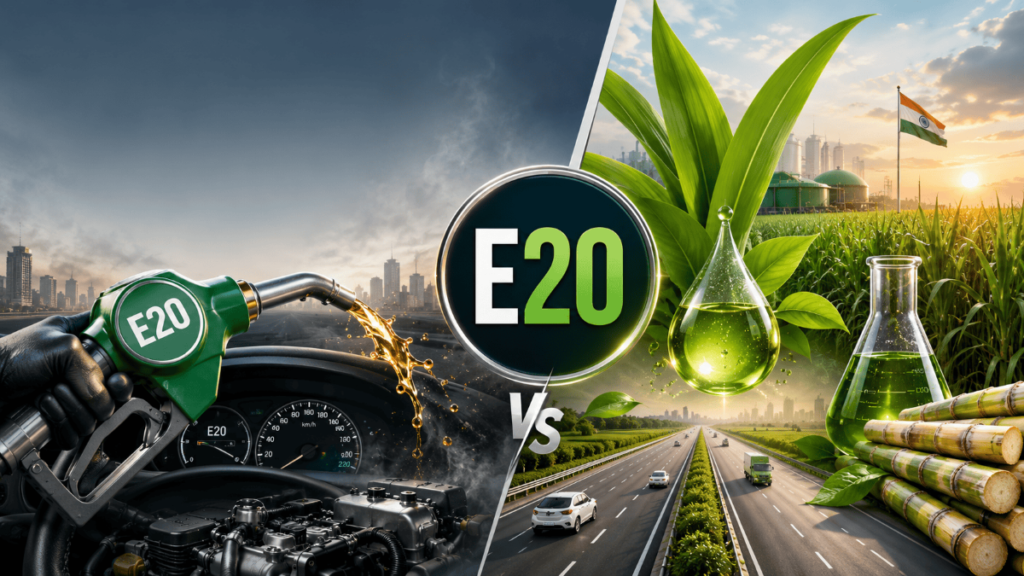
Is E20 petrol the future of cleaner transportation, or is it creating new problems for millions of motorists? As India continues its transition to ethanol-blended fuel, the debate has moved beyond experts and policymakers. Today, the loudest voices belong to everyday vehicle owners.
What Is the E20 Debate All About?
E20 petrol is a blend containing 20% ethanol and 80% petrol. The Government of India introduced it to reduce dependence on imported crude oil, lower carbon emissions, and create additional income opportunities for farmers through increased ethanol production.
On paper, the policy offers several long-term benefits. However, across social media platforms, automobile forums, and public discussions, many motorists have begun questioning whether the transition has come too quickly.
Why Are People Concerned About E20?
For many vehicle owners, the debate isn’t about environmental goals—it’s about their daily driving experience.
Here are the concerns people are sharing most frequently.
“My Car Isn’t Giving the Same Mileage”
One of the biggest complaints is reduced fuel efficiency.
Many drivers claim they now need to refill their fuel tanks more often than before. Some believe their mileage has dropped enough to increase their monthly fuel expenses.
While these experiences are widely shared online, mileage can also be influenced by driving habits, traffic conditions, vehicle maintenance, tyre pressure, and engine condition.
Owners of Older Vehicles Are Worried
Another major concern arises from people driving vehicles manufactured before the widespread adoption of E20 compatibility.
Many owners ask questions like:
- Will E20 damage my engine?
- Will fuel pipes or rubber components wear out faster?
- Will repair costs increase after a few years?
Although the government maintains that approved E20-compatible vehicles have been tested and that there is no evidence of widespread engine damage, uncertainty remains among owners of older vehicles.
Rising Maintenance Costs
Several motorists believe servicing has become more frequent after switching to E20 petrol.
Common concerns include:
- injector cleaning
- engine knocking
- fuel filter replacement
- increased maintenance bills
It is important to note that these are personal experiences shared by vehicle owners and have not been universally attributed to E20 petrol alone.
Social Media Has Turned the Issue Into a National Conversation
The E20 debate has exploded across YouTube, Facebook, X (formerly Twitter) and automotive communities.
Thousands of users are posting:
- fuel bills
- mileage comparisons
- vehicle reviews
- mechanic opinions
- long-term ownership experiences
Some videos supporting E20 have also gone viral, while others criticize the policy, making it one of India’s most discussed automotive topics in recent weeks.
What Supporters of E20 Say
Not everyone opposes ethanol blending.
Supporters argue that E20 offers significant long-term advantages for India.
Reduced Oil Imports
India imports a large share of its crude oil. Replacing part of petrol with ethanol could reduce dependence on international oil markets.
Better for Farmers
Higher ethanol production creates additional demand for crops such as sugarcane and maize, potentially increasing farmers’ income.
Cleaner Fuel
Supporters also believe ethanol blending can reduce tailpipe emissions and contribute to India’s climate goals.
These remain the primary reasons behind the government’s continued support for E20.
What the Government Says
The Government of India continues to defend the E20 programme.
According to official statements:
- E20 has undergone extensive testing.
- Compatible vehicles can safely use E20.
- Ethanol blending improves India’s energy security.
- Reports of widespread engine damage have not been established through official evidence.
Officials have also urged motorists to rely on verified technical information rather than unverified social media claims.
What Do Ordinary Vehicle Owners Want?
Interestingly, many people are not demanding an end to E20.
Instead, they are asking for:
- More transparency about fuel compatibility
- Better public awareness
- Clear guidance for older vehicles
- The option to choose between regular petrol and E20
- More long-term independent testing
For many motorists, the issue is less about opposing cleaner fuel and more about having confidence in the transition.
People’s Opinion: A Debate That Goes Beyond Fuel
The E20 discussion has become more than a technical conversation about ethanol percentages.
For many Indians, it reflects broader questions:
- Are consumers being given enough information?
- Should drivers have more fuel choices?
- How can environmental goals be balanced with affordability?
- What protections exist for owners of older vehicles?
These are the questions that continue to dominate public discussions.
Conclusion
The E20 petrol debate highlights how public policy and everyday driving intersect. While the government emphasizes long-term environmental and economic benefits, many motorists remain focused on practical concerns such as mileage, maintenance, and vehicle compatibility.
As more data emerges and more drivers share their experiences, the conversation around E20 is likely to continue. The success of the policy may depend not only on its technical performance but also on transparent communication and public confidence.
Have You Used E20 Petrol?
Have you noticed any change in your vehicle’s mileage or performance after using E20 petrol? Share your experience in the comments below.