India’s Union Budget 2026-27
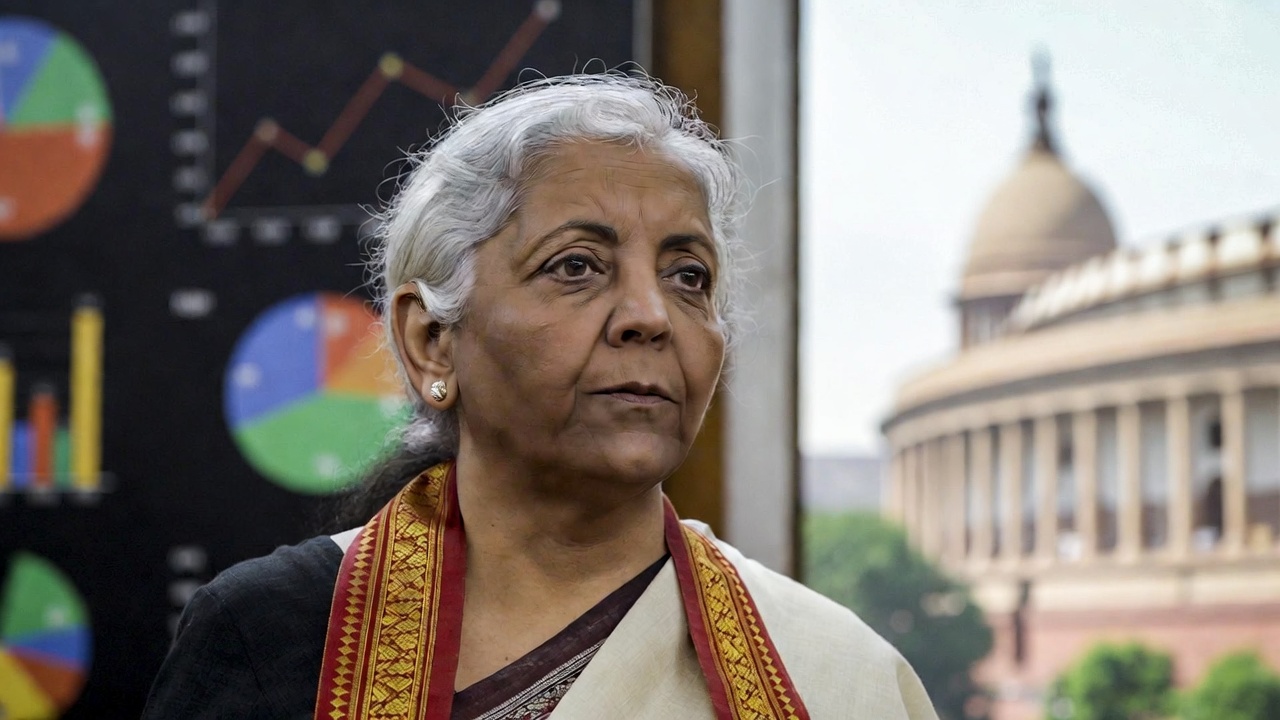
The Union Budget of India is the government’s annual financial statement, outlining its revenue, expenditure, and policy priorities for the upcoming fiscal year. It serves as a roadmap for economic growth, fiscal management, and sectoral development. The 2026-27 budget, presented by Finance Minister Nirmala Sitharaman, marks her ninth consecutive presentation and is the first full budget of the current term. Notably, it was presented on February 1, 2026, a Sunday—a historic first for India, as budgets are traditionally tabled on weekdays during parliamentary sessions. To accommodate this, a special trading session was held on Sunday, allowing real-time market reactions.
About Finance Minister Nirmala Sitharaman
Nirmala Sitharaman is a prominent Indian politician and economist who has been serving as the Minister of Finance and Corporate Affairs since 2019. She is the first full-time female finance minister of India. Born on August 18, 1959, in Madurai, Tamil Nadu, she comes from a Tamil Iyengar Brahmin family. Her father, Narayanan Sitharaman, was an employee of the Indian Railways, and her mother, Savitri, managed the household. Due to her father’s job transfers, the family moved frequently during her childhood.
She is married to Dr. Parakala Prabhakar, a political commentator and economist, whom she wed in 1986. The couple has one daughter, named Parakala Vangmayi. Interestingly, her husband comes from a family with Congress party affiliations, while Sitharaman is a key member of the Bharatiya Janata Party (BJP).
In terms of education, Sitharaman completed her early schooling at Sacred Heart Convent Anglo-Indian Higher Secondary School in Villupuram and Vidyodaya School in Chennai. She earned a Bachelor of Arts (BA) degree in Economics from Seethalakshmi Ramaswami College in Tiruchirappalli in 1980. She then pursued higher studies at Jawaharlal Nehru University (JNU) in New Delhi, where she obtained a Master of Arts (MA) in Economics and a Master of Philosophy (MPhil) in 1984. She began a PhD in Economics but did not complete it. Her academic background in economics has been instrumental in her roles in government, particularly in finance and commerce.
Politically, Sitharaman is a member of the Rajya Sabha, the upper house of India’s Parliament. She was first elected to the Rajya Sabha from Andhra Pradesh in 2014. In 2016, she was reallocated to represent Karnataka, and she was re-elected from there in 2022.
Before entering politics, she worked in various roles, including at the Agricultural Engineers Agro Company in London, as a home decor sales assistant at Habitat, and as a senior manager at PricewaterhouseCoopers (PwC). She also served on the National Commission for Women from 2003 to 2005 and founded a school called Pranava in Hyderabad in 1997.
Key Highlights of the 2026-27 Budget
The 2026-27 budget focuses on sustaining economic growth amid global uncertainties, with emphasis on infrastructure, manufacturing, fiscal discipline, and social inclusion. It aims to balance fiscal consolidation with investments in high-growth areas like technology, defence, and skills development.
- Total Expenditure: Estimated at ₹53.47 lakh crore (about $6.4 trillion), a 7.7% increase from the revised estimates (RE) of 2025-26.
- Fiscal Deficit: Targeted at 4.3% of GDP, down from 4.4% in 2025-26 RE, showing commitment to debt reduction. The debt-to-GDP ratio is projected to fall to 55.6% from 56.1%.
- Capital Expenditure (Capex): ₹12.2 lakh crore (3.1% of GDP), up from ₹11.2 lakh crore in 2025-26 budget estimates (BE). This supports infrastructure projects like roads, railways, and urban development.
- Revenue Receipts: Net tax receipts estimated at ₹28.7 lakh crore, with gross tax revenue growth budgeted at 8%.
- Key Initiatives:
- SME Growth Fund: ₹10,000 crore to nurture micro, small, and medium enterprises as future champions.
- Infrastructure Push: Enhanced focus on biopharma, semiconductors, and aerospace, with ₹40,000 crore each for electronics and semiconductor schemes.
- Social Welfare: Increased allocations for agriculture, tourism, and youth skilling, including AVGC (Animation, Visual Effects, Gaming, Comics) labs in schools and colleges.
- Tax Changes: No major changes in income tax slabs, but a hike in Securities Transaction Tax (STT) on futures and options (F&O) trades to curb speculative trading.
- Green and Digital Focus: Incentives for sustainable manufacturing and digital infrastructure.
The budget projects nominal GDP growth at 10% for 2026-27, building on 8% in 2025-26 RE, with priorities like “Garib (poor), Yuva (youth), Annadata (farmers), and Nari (women).”
Comparison: 2025-26 vs. 2026-27 Budget
The 2026-27 budget builds on the previous year’s foundation but shows moderated growth in some areas due to fiscal prudence. Here’s a side-by-side comparison:
| Aspect | 2025-26 (Revised Estimates) | 2026-27 (Budget Estimates) | Change |
|---|---|---|---|
| Total Expenditure | ₹49.6 lakh crore | ₹53.47 lakh crore | +7.8% |
| Fiscal Deficit (% GDP) | 4.4% | 4.3% | -0.1% |
| Debt-to-GDP Ratio | 56.1% | 55.6% | -0.5% |
| Capital Expenditure | ₹11 lakh crore | ₹12.2 lakh crore | +10.9% |
| Net Tax Receipts | ₹26.7 lakh crore | ₹28.7 lakh crore | +7.5% |
| Defence Allocation | ₹6.81 lakh crore | ₹7.85 lakh crore | +15.3% |
| Health Allocation | ₹95,957 crore (approx.) | ₹1.06 lakh crore | +10.5% |
| Education Allocation | ₹1.28 lakh crore | ₹1.39 lakh crore | +8.6% |
- Growth Focus: Both budgets prioritize capex for infrastructure, but 2026-27 ramps up defence and manufacturing amid geopolitical tensions (e.g., post-Operation Sindoor).
- Fiscal Path: 2026-27 continues consolidation, targeting a debt-to-GDP of 50% (±1%) by 2030-31.
- Sector Shifts: Defence sees a sharp rise (15.3%), while health and education get modest boosts (around 8-10%). Revenue expenditure grows at 6.6%, slower than capex.
- Tax Revenue: Direct taxes grow 11.4%, but indirect (like GST) only 3%, reflecting economic slowdown concerns.
Overall, the 2026-27 budget is more ambitious in defence and tech but cautious on welfare, aiming for long-term stability.
Budget Presentation Durations in Recent Years
Finance Minister Sitharaman’s speeches have varied in length, reflecting the budget’s complexity. Her 2026 speech lasted about 85 minutes (1 hour 25 minutes). Here’s a look at the last five years:
| Year | Duration | Notes |
|---|---|---|
| 2026 | 85 minutes | Focused on growth and reforms; second-shortest in her tenure. |
| 2025 | 74-77 minutes | Emphasized youth and women; shorter due to election-year brevity. |
| 2024 | 85 minutes (full) / 56-58 minutes (interim) | Post-COVID recovery themes. |
| 2023 | 87 minutes | Balanced fiscal and social priorities. |
| 2022 | 92 minutes | Digital economy push amid pandemic. |
Trends show speeches shortening post-2020 (her longest at 2 hours 42 minutes), possibly for conciseness. Average over the last five years: ~85 minutes.
Sectoral Comparisons: Education, Defence, and Health (% of GDP)
India’s budget allocations are compared below with the USA and China, using public expenditure as a percentage of GDP (latest available/estimated for 2025-26). These are total public spending (central + state/local), as federal budgets alone don’t capture full pictures. Data sources include World Bank, SIPRI, and government reports.
| Sector | India (~2026) | USA (~2025) | China (~2025) | Key Insights |
|---|---|---|---|---|
| Education | 4.5% | 5.4% | 4.0% | India lags in per-student spending; focuses on skilling. USA has higher total due to state funding. China emphasizes tech education. |
| Defence | 2.0% | 3.5% | 1.7% (official; real ~2.5%) | India’s rise reflects border tensions. USA leads globally. China’s official figure understates actual spending. |
| Health | 2.0% | 8.0% (public) | 3.0% | India’s low share highlights gaps in infrastructure. USA’s high due to Medicare/Medicaid. China invests in post-COVID resilience. |
- Education: India’s central allocation (₹1.39 lakh crore) is ~0.35% of GDP, but total public spending reaches 4.5%. Gaps persist in quality and access compared to peers.
- Defence: At ₹7.85 lakh crore (~2% GDP), India’s focus is on modernization. USA’s $850 billion dominates, while China’s real spending may rival it in purchasing power.
- Health: Central allocation (₹1.06 lakh crore) is ~0.27% GDP, but total ~2%. Emphasis on mental health and cancer drugs, but under-spending remains an issue.
These percentages show India’s balanced approach but underscore the need for higher investments to match global standards.
Stock Market Reaction
Indian stock markets are typically closed on Sundays, but a special trading session was held on February 1, 2026, to allow immediate reactions to the budget. Despite the unusual timing, markets opened volatile and ended sharply lower—the worst budget-day performance in six years.
- Key Indices: BSE Sensex closed at 80,722.94, down 1,843 points (2.23%). Nifty50 ended at 24,825.45, down 593 points (2.33%).
- Reasons for Downfall:
- STT Hike: The increase in STT on F&O trades raised trading costs, hitting brokerage stocks hard (e.g., down 18%).
- No Capital Gains Relief: Markets expected tax cuts on gains, but none came, leading to profit-booking.
- Global Cues and Volatility: Broader selling in midcaps and smallcaps amid fiscal caution.
- Despite Sunday: The “downfall despite being closed on Sunday” likely refers to the surprise of a market crash on a non-trading day. However, the special session enabled trading, turning optimism (early gains of 0.38%) into a knee-jerk sell-off.
Markets rebounded slightly the next day (February 2), up 0.4%, as value-buying kicked in. This reaction highlights how budgets can sway sentiment, but long-term growth depends on execution.
For investors, the Sunday session proved budgets can disrupt even weekends!