


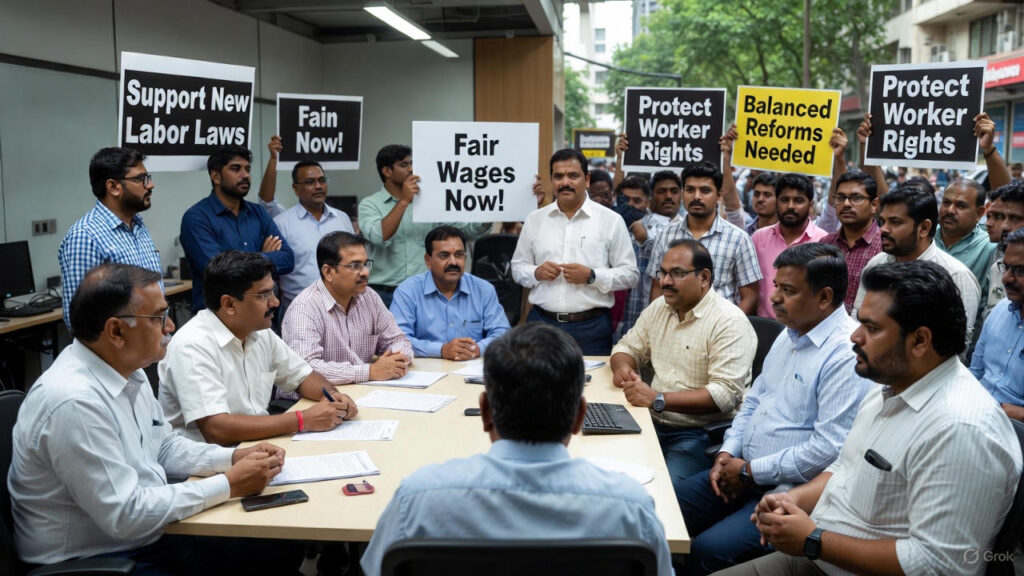
India has introduced four new labour laws, called “Labour Codes.” As per Government,these are big changes to protect workers and make rules easier for businesses. Government started working fully from November 21, 2025. Before this, there were many old rules that were hard to follow. The new codes replace 29 old laws with just four simple ones. This helps workers get better pay, safety, and benefits, while businesses can hire and grow faster.
The four codes are:
- Code on Wages, 2019: About fair pay and timely wages for everyone.
- Industrial Relations Code, 2020: About jobs, unions, and solving fights at work.
- Code on Social Security, 2020: About health insurance, pensions, and help for job loss.
- Occupational Safety, Health and Working Conditions Code, 2020: About safe workplaces and good working hours.
What Were the Old Labour Laws?
The old laws were made a long time ago, mostly between the 1930s and 1950s, before and just after India became independent. There were 29 different laws, each covering one small thing like wages or safety. They were like a big puzzle—hard to understand and follow. For example:
- Businesses had to file many papers and get many approvals.
- Rules only covered big factories or certain jobs, leaving out small shops, gig workers (like delivery people), and most informal jobs.
- Workers in small places or new jobs like apps (Uber, Zomato etc.) had little protection.
- Women could not work night shifts in many places, and migrant workers (people moving from village to city for jobs) had no special help.
These old rules made it tough for businesses to grow and for workers to get fair treatment quickly.
Comparison: Old Laws vs. New Codes
The new codes make things simpler by combining the old 29 laws into 4. Here’s a simple table comparing key parts. It shows how the new rules fix problems from the old ones.
| Area | Old Laws (29 Laws) | New Codes (4 Codes) |
|---|---|---|
| Number of Rules | 29 separate laws, over 1,400 sections. Many forms and approvals needed. | 4 codes with fewer rules. One form for registration, one license, and one report per year. Easier for all. |
| Who Gets Minimum Wage? | Only workers in about 1,000 specific jobs (like factories). No floor wage. | All workers, even in small shops or gig jobs. National floor wage set by center, states can adjust for local costs. |
| Social Security (like pension, health insurance) | Only for big organized jobs (about 10% of workers). No help for gig or migrant workers. | Covers all, including gig workers and migrants. Apps like Ola must pay 1-2% of earnings into a fund for benefits. |
| Firing Workers (Layoffs) | Needed government okay for factories with 100+ workers. Hard for businesses. | Need government okay for factories with 300+ workers. Hard for businesses. |
| Work Hours & Safety | Different rules for different jobs. No free health checks. Women banned from night work in many places. | Max 8-12 hours/day, 48/week. Free yearly health checks for over-40s or risky jobs. Women can work nights with safety steps. |
| Job Letters & Benefits | No must for appointment letters. Fixed-term jobs (short contracts) had less pay/benefits. Gratuity only after 5 years for all. | Must give job letter to all. Short-job workers get same pay and gratuity (end-of-job bonus) after 1 year. |
| Strikes & Unions | Strikes needed notice only in some public jobs. Many unions could fight each other. | 14-day notice for all strikes. One main union per workplace to avoid confusion. |
| Basic Pay & Gratuity | Basic pay could be very low (10-20% of total salary). Allowances made up most pay, so gratuity, PF, and pension were small. Gratuity = (last basic pay) × (15/26) × years worked. | Basic pay must be at least 50% of total salary (CTC). Wages for gratuity/PF include basic + DA + half of other allowances. Gratuity higher overall, but monthly take-home might drop a bit if CTC stays the same. Same formula, but on bigger base. |
In short as per goverment, old laws were like old roads—full of bumps and only for some cars. New codes are like highways—smoother for everyone but with guardrails for safety.
Merits (Good Points) of the New Laws
These codes have many pluses that help workers and businesses:
- Easier to Follow: One set of rules cuts paperwork by 80%. Small businesses save time and money.
- Better Pay for All: Minimum wage for millions of workers, including gig jobs. No gender pay gap for same work.
- More Safety and Health: Free check-ups, safe gear, and rest areas. Covers risky jobs like mining better.
- Help for New Workers: Gig and app workers get insurance and pensions. Migrants get portable benefits (work anywhere).
- Fair Job Growth: Businesses can hire short-term easily, creating more jobs. Faster courts solve fights quickly.
- Women and Youth Friendly: Night shifts okay for women with safety. Training funds for laid-off workers.
- Stronger Long-Term Savings: Higher basic pay means bigger gratuity, PF, and pension pots. Workers get more money at retirement or job end.
Overall, they make work fairer and help India’s economy grow by bringing more people into safe jobs.
Demerits (Bad Points) of the New Laws
Not everything is perfect. Some worry the codes favor bosses too much:
- Less Power for Unions: Strikes need longer notice (14-60 days), making protests harder. Fewer unions per factory could weaken worker voices.
- Job Insecurity: No needed government okay/permission for factories with less than 300 workers to fire staff. Hard for businesses.. Short contracts might mean less steady jobs.
- Weak Safety in Some Areas: Rules for dangerous jobs like building sites are not strict enough.
- Hard to Roll Out: States make their own rules, so it differs by place. 90% informal workers might not get full benefits yet.
- Gaps for Gig Workers: Benefits are new, but how to claim them is unclear. Apps pay little into funds.
- Slow Start: Unions protested, delaying full use in some states. Needs more training for officers.
- Easier Use of Contract Workers: The new laws relax old rules that stopped companies from using contract workers for main (core) jobs. This could let bosses convert regular (permanent) workers into contract ones more easily. Contract jobs often have less security, even if benefits are now more equal for short-term roles.
- Possible Lower Monthly Pay: With basic pay now 50% of total, more money goes to PF and gratuity. If bosses don’t raise total CTC, your take-home cash each month could fall by 5-10%.
Why Are Labour Unions Protesting Against These Laws?
Since the codes started on November 21, 2025, unions across India have held big protests in cities like Delhi, Mumbai, and Kolkata. Over 10 central trade unions, like CITU and INTUC, joined together. They call the changes a “deceptive fraud” that hurts workers. Here’s why, in simple terms:
- Harder to Fight for Rights: Strikes now need 14 days’ notice (up to 60 for some), and unions say this stops quick action against unfair treatment. It feels like going back to old colonial times where workers couldn’t speak up easily.
- Easier for Bosses to Fire People: The limit for layoffs without government okay went from 100 to 300 workers. Unions fear more job losses without checks.
- Weaker Unions: New rules make it tougher to register unions and easier for bosses to cancel them. This cuts workers’ group power to bargain for better pay or safety.
- Pro-Business Over Workers: Unions say the codes look simple but really help companies hire and fire freely, while cutting protections. They mix with anger over privatization of jobs in power and banks.
Protests include marches, dharnas (sit-ins), and calls to scrap the codes. Unions want talks with the government to fix these issues. So far, no big changes, but pressure is on.