


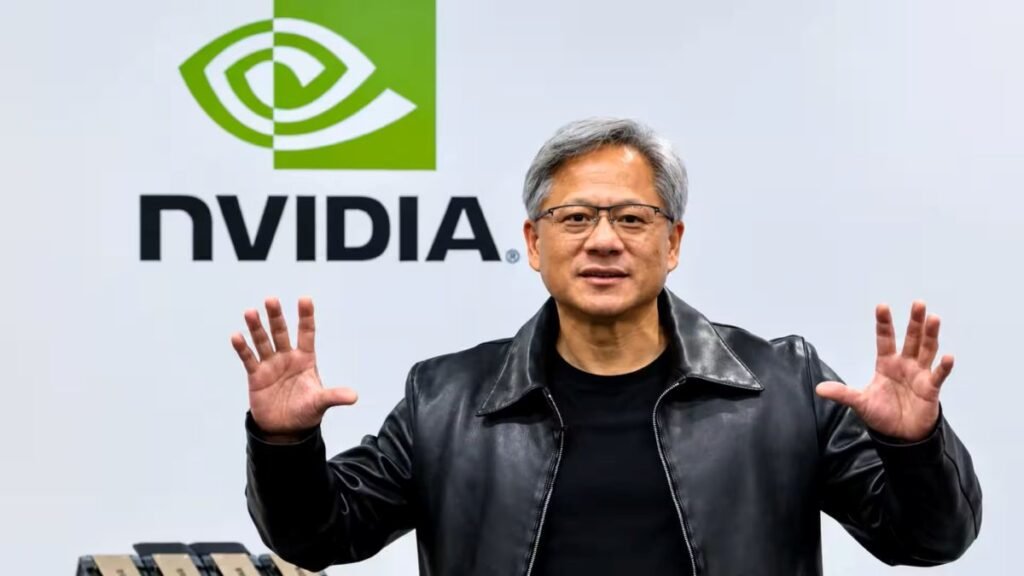
In one of the most remarkable corporate turnarounds in recent tech history, Nvidia’s board of directors reinstated co-founder Jensen Huang as president, chief executive officer, and board member, effective immediately, on November 23, 2026. The decision came just 11 days after Huang resigned amid revelations of extramarital affairs, including one with a woman suspected by U.S. intelligence of ties to Chinese intelligence and followed direct intervention by President Donald Trump.
The move reversed the board’s earlier public stance. On an earnings call the previous week, board chair Harvey C. Jones had stated that the directors “do not intend to reinstate Jensen as CEO.” Yet after a series of meetings with Huang and input from senior levels of the U.S. government, the board voted unanimously to bring him back.
The Scandal That Triggered the Crisis
The crisis erupted in early November 2026. On November 8, Huang issued a letter to Nvidia employees admitting he had been unfaithful to his wife. “I was unfaithful to my wife. My actions hurt her and our children. There is no excuse for what I did. I am deeply sorry,” he wrote. He linked the personal matter to “national security concerns raised in news reports” and pledged full cooperation with a board investigation.
Those reports centered on Alice Huang (also known as Huang Le), a Chinese citizen and executive at Singapore-based AI infrastructure firm Megaspeed. U.S. intelligence agencies had identified her as a suspected Chinese intelligence asset who maintained contact with an officer of China’s Ministry of State Security. Megaspeed had purchased billions of dollars in Nvidia chips, and there were parallel concerns about possible diversion of restricted AI chips to China. Additional reporting alleged Huang had relationships with Nvidia subordinates as well.
Huang resigned as CEO, president, and board member on November 12. The board appointed CFO Colette Kress as interim CEO and launched an independent investigation. Nvidia’s stock, already under pressure from broader AI-trade doubts, plunged sharply in the following days.
Trump’s Direct Role and Government Assurances
President Trump, who maintains a close relationship with Huang, publicly defended him early and intensified his advocacy over the weekend of November 21–22. He posted on Truth Social urging the board to rehire Huang, calling it “the best thing” for both the company and the United States. According to multiple reports, Trump (and Vice President JD Vance, acting as a liaison) engaged with board members, including dialing into or being represented at a Sunday night board meeting.
In a Monday interview with CNBC, Trump claimed credit: “I made the deal… I spoke to them, and I convinced them.” He said the administration provided assurances that Huang posed no national security risk and that Attorney General Todd Blanche confirmed the government possessed no evidence of unlawful conduct by Huang. Trump later told Huang in a phone call to “work hard.” White House officials described the president as “totally involved.”
Nvidia’s official statement explicitly referenced this input: “In the process of reaching its decision, the Board received input from senior levels of the United States government, and based on that input, the Board is confident that Mr Huang’s reinstatement poses no national security risk.”
Official Statements and Continued Oversight
Board Chair Harvey C. Jones said: “The Board believes Jensen is the right person to lead NVIDIA, and that his reinstatement is in the best interests of our stockholders, employees, partners and customers. We have every confidence in Jensen… We are grateful to Colette Kress for her outstanding service as interim CEO.”
Huang responded: “I am honored to return to NVIDIA and lead one of the most consequential technology companies in the world at the beginning of a new industrial revolution. I take this responsibility with the greatest humility and renewed commitment… I can’t wait to get back to work.” He thanked the board, Kress, employees, shareholders, partners, and especially his family.
Importantly, the independent board investigation into the allegations continues, and Huang has pledged full cooperation. The company also established a new National Security and Export Control Committee of independent directors and plans to appoint a chief compliance officer. Huang is scheduled to meet with congressional committees investigating the matter.
Market Reaction
Investors responded with relief. Nvidia shares surged approximately 31–32% on November 23 (closing around $165 after a low near $125 the prior Friday), adding roughly $900–950 billion in market value in a single day, one of the stock’s strongest sessions in decades. The rally lifted the broader market: the Nasdaq rose about 6.5%, the S&P 500 about 4.7%, and semiconductor and AI-related stocks broadly. Analysts described it as removing a major overhang on the AI trade.
Huang returned to Nvidia’s Santa Clara headquarters on Monday to cheers from employees. The episode draws comparisons to Sam Altman’s brief ouster and rapid reinstatement at OpenAI in 2023, underscoring how foundational certain founder-CEOs have become to their companies’ valuations and strategic direction in the AI era.
The reinstatement does not end scrutiny. Questions remain about the depth of any intelligence exposure, export-control compliance involving Megaspeed and related entities, internal culture, and succession planning at a company central to U.S. technological competition with China. For now, however, Jensen Huang is back at the helm of the world’s most valuable semiconductor company, with the explicit blessing of both his board and the White House.