
The Aravalli Hills: India’s Ancient Ecological Shield Under Threat
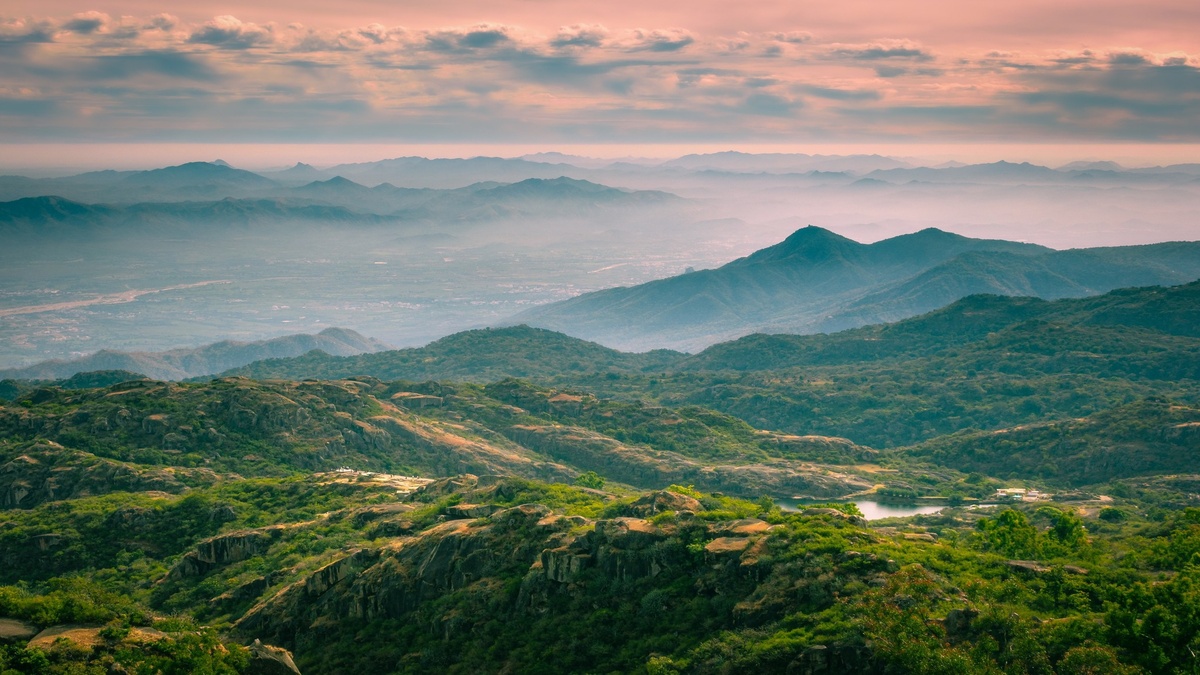
The Aravalli Hills, one of the world’s oldest mountain ranges, have recently become a focal point of national debate in India. Spanning approximately 690 kilometers across Gujarat, Rajasthan, Haryana, and Delhi, these ancient ridges—formed over two billion years ago—serve as a critical natural barrier. Yet, a Supreme Court ruling in November 2025 redefining what constitutes “Aravalli Hills” has sparked widespread protests, environmental concerns, and political controversy.
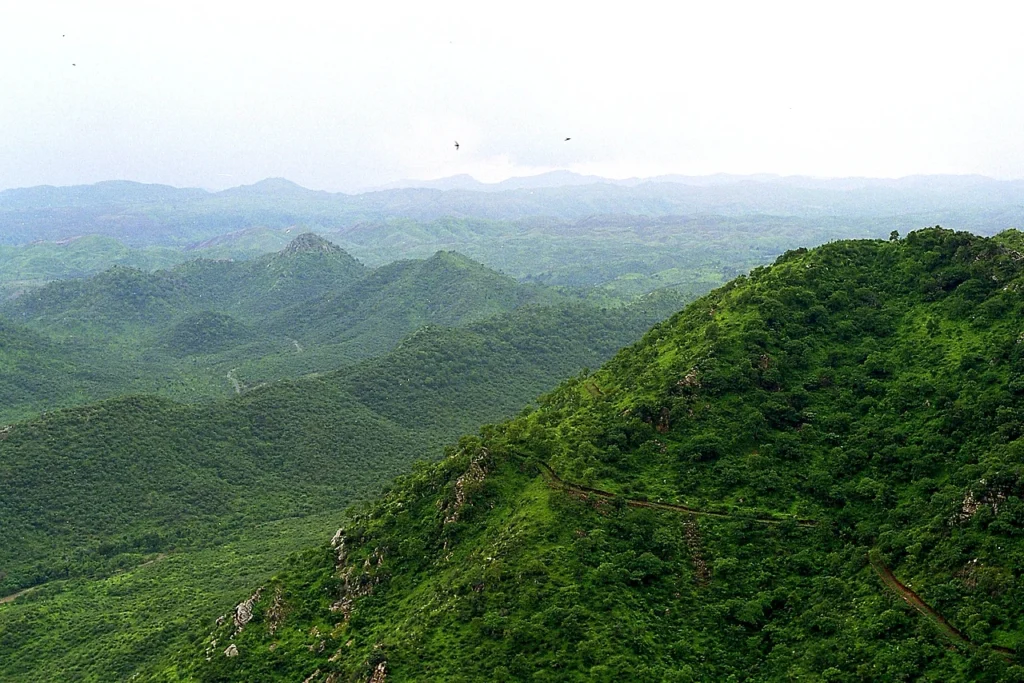
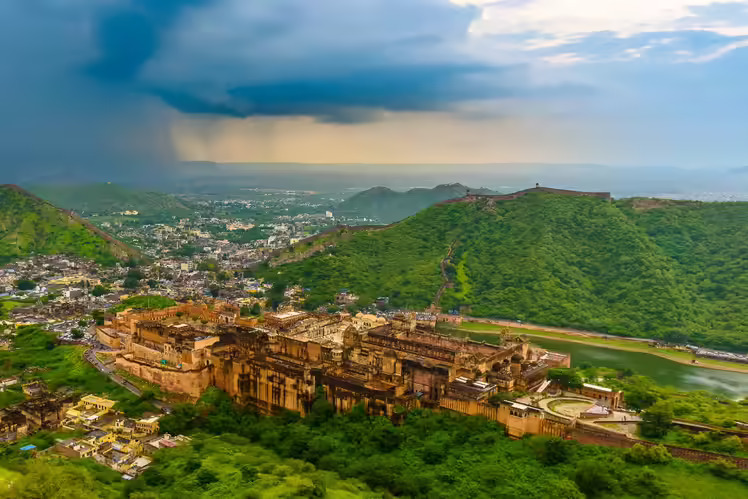
These images capture the serene yet rugged beauty of the Aravalli landscape—rolling hills, scrub forests, and misty valleys that belie the intense pressures they face.
Geological and Ecological Significance
The Aravallis predate the Himalayas and once towered higher, shaped by millennia of erosion. Stretching nearly 700 km from Gujarat to Delhi, they influence regional climate, soil stability, and geography.
Ecologically, they are indispensable:
- Barrier Against Desertification: They slow the eastward advance of the Thar Desert, protecting the fertile Indo-Gangetic plains.
- Groundwater Recharge: Fractured rocks allow rainwater percolation, sustaining aquifers vital for agriculture and urban water in Rajasthan, Haryana, Gujarat, and Delhi-NCR.
- Air Quality Regulation: As the “green lungs” of Delhi-NCR, native vegetation traps dust and pollutants, moderating temperatures and reducing particulate matter.
- Biodiversity Corridor: Supporting diverse ecosystems—dry forests, scrublands, wetlands—they host leopards, hyenas, nilgai, over 200 bird species, and endemic plants, linking fragmented habitats amid urbanization and climate stress.
Rivers like the Chambal, Sabarmati, and Luni originate here, underscoring their role in water security, food systems, and public health.
Historical Timeline of Mining Restrictions and Legal Battles
Mining in the Aravallis has long conflicted with conservation:
- 1990s: The Ministry of Environment imposed restrictions, limiting mining to sanctioned projects, but enforcement was weak.
- 2002-2009: Supreme Court bans on mining in parts of Haryana (e.g., Gurugram, Faridabad) and Rajasthan followed reports of widespread illegal quarrying.
- 2010s-2020s: Inconsistent state definitions allowed loopholes. The Forest Survey of India used slope-based criteria, while Rajasthan applied a 100m elevation rule.
- May 2024: Supreme Court directs a multi-agency committee (MoEFCC-led) for a uniform definition.
- October 2025: Committee recommends elevation ≥100m above local relief for “Aravalli Hill,” with clusters within 500m forming “Ranges,” including supporting slopes.
- November 20, 2025: Supreme Court accepts this definition, freezes new mining leases until a Management Plan for Sustainable Mining (MPSM) is prepared, and prohibits mining in core/inviolate zones (protected forests, eco-sensitive areas).
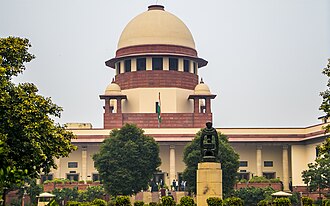
The Supreme Court of India, where the pivotal 2025 ruling was delivered.
Why It’s in the News: The 2025 Controversy
The November 2025 ruling has ignited protests across Rajasthan, Haryana, and Delhi. Environmentalists argue the height-based definition excludes over 90% of the range (mostly lower hills in Rajasthan and Haryana), potentially opening vast areas to mining, construction, and degradation. They warn of accelerated desertification, groundwater depletion, biodiversity loss, and worsened Delhi-NCR pollution.
The government counters that the definition protects entire hill systems (including lower contours and 500m buffers), with over 90% of the landscape safeguarded. No new leases are allowed pending the MPSM, and illegal mining remains banned.
Protests erupted in December 2025, with demonstrations in Udaipur, Gurugram, and Jaipur under #SaveAravalli.
Scenes from recent protests highlighting public outrage over potential mining threats.
Media Narrative and Stakeholder Views
Media coverage is polarized:
- Outlets like DownToEarth and Frontline criticize the ruling as “ecological blindness,” favoring extraction over science.
- Government-aligned sources emphasize uniformity, stricter enforcement, and initiatives like the Aravalli Green Wall Project (launched June 2025 for afforestation).
Environmental groups demand declaring the entire range a “critical ecological zone” and holistic protection beyond elevation thresholds. Politicians across parties have joined calls to #SaveAravalli.
Adani Involvement?
Allegations linking the Adani Group to renewed mining interests surfaced in social media and some reports, often in broader critiques of corporate influence on policy. However, no credible news sources confirm direct Adani involvement in Aravalli mining projects tied to the 2025 ruling. Claims appear speculative, with the controversy centered on general mining lobbies rather than specific companies.
Conclusion: A Fragile Balance
The Aravalli Hills embody India’s ancient natural heritage and modern environmental challenges. While the 2025 Supreme Court order aims for clarity and sustainable regulation, critics fear it prioritizes short-term gains over long-term resilience. Protecting this “natural ecological shield” requires balanced policy, robust enforcement against illegal mining, and recognition of its interconnected ecosystem—beyond mere height measurements.
As protests continue and the MPSM is developed, the fate of the Aravallis will test India’s commitment to ecological security amid development pressures.
Продвижение сообщества или страницы во ВКонтакте с помощью привлечения подписчиков. Услуга помогает быстро увеличить аудиторию, повысить активность и доверие к группе или профилю. Переходите по запросу накрутка подписчиков вк дешево. Возможна накрутка живых и заинтересованных пользователей, что улучшает видимость сообщества, помогает быстрее развивать бренд, проекты и продажи. Подходит для групп, пабликов и личных страниц.
Битрикс: Управление сайтом Малый Бизнес — функциональная редакция CMS для создания интернет-магазинов и коммерческих проектов. Переходите по запросу Битрикс Малый Бизнес описание. Система включает каталог товаров, корзину, онлайн-оплаты, маркетинговые инструменты и интеграцию с 1С. Решение подходит для компаний, которым нужен надежный и масштабируемый сайт с возможностью расширения функционала через модули и интеграции.