The ED-(I-PAC) Raid Controversy
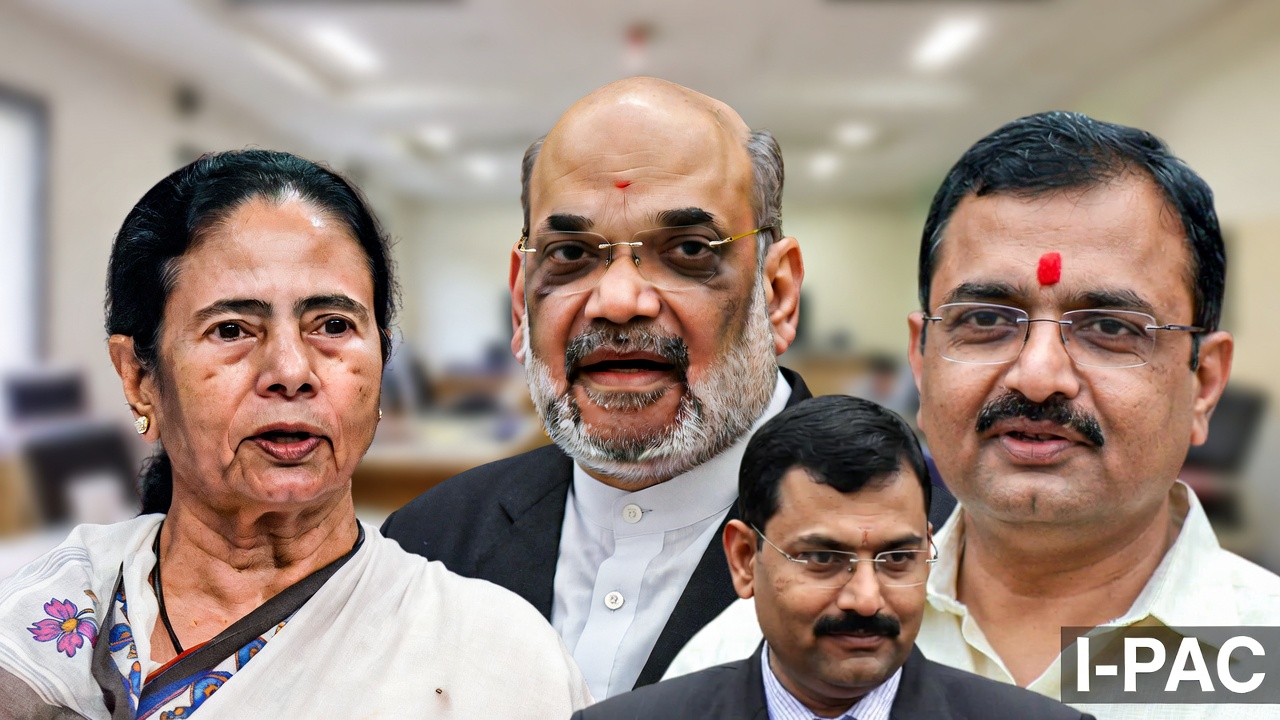
In the high-stakes world of Indian politics, few figures embody resilience and controversy quite like Mamata Banerjee, the Chief Minister of West Bengal and leader of the Trinamool Congress (TMC). Recently, her dramatic intervention during Enforcement Directorate (ED) raids on the Indian Political Action Committee (I-PAC) has ignited a firestorm, pitting state authority against central agencies. This blog breaks down the issue systematically, exploring the raids’ origins, I-PAC’s role, ED’s track record, judicial interventions, and reactions from political opponents. As West Bengal gears up for potential elections, this episode underscores the deepening rift between the TMC and the Bharatiya Janata Party (BJP)-led central government.
What is I-PAC?
I-PAC, short for the Indian Political Action Committee, is India’s premier political consultancy firm specializing in election campaigns and strategy. Founded in 2013 by renowned election strategist Prashant Kishor (often called PK), it has revolutionized data-driven campaigning in India. I-PAC provides services like voter mapping, social media management, booth-level strategies, and candidate selection advice to political parties. It gained fame for its role in Narendra Modi’s 2014 BJP campaign but has since worked with various parties, including the TMC since 2021. Notably, I-PAC helped engineer TMC’s landslide victory in the 2021 West Bengal assembly elections, solidifying its ties with Mamata Banerjee’s party. Today, under directors like Pratik Jain, I-PAC operates as a professional entity, but its close association with TMC has made it a target in political probes. Prashant Kishor left I-PAC in 2021 to focus on his own political ventures, but the firm continues to thrive, reportedly earning hundreds of crores through consultancy fees.
Why Did the ED Raid I-PAC? The Case and Its Timeline
The ED’s raids on I-PAC’s Kolkata office and the residence of its director, Pratik Jain, occurred on 8th January 2026 , amid escalating political tensions. The agency claims these actions stem from an investigation into a massive coal scam in West Bengal, where illegal mining allegedly generated proceeds of crime worth over Rs 1,300 crore. Specifically, ED alleges that Rs 10 crore from this scam was funneled to I-PAC through hawala channels or other illicit means, linking the consultancy to money laundering under the Prevention of Money Laundering Act (PMLA).
The coal scam itself dates back to 2020, when the Central Bureau of Investigation (CBI) began probing illegal coal mining in the Asansol-Raniganj belt. By 2021, ED took over the money laundering angle, leading to arrests of key figures like Anup Majee (alias Lala) and others accused of siphoning funds. I-PAC’s involvement surfaced later, with ED claiming evidence of fund transfers tied to TMC’s election campaigns. During the raids, ED officials reportedly sought digital devices, hard disks, and documents related to TMC’s internal strategies, candidate lists, and financial dealings—not just coal scam proceeds. Mamata Banerjee dramatically intervened, arriving at the site with state officials and allegedly removing files, accusing ED of attempting to “steal” TMC’s election data ahead of 2026 polls. This turned the raid into a public spectacle, with Banerjee leading protests and framing it as BJP-orchestrated vendetta.
ED’s Conviction Rate: From 2014 to 2025
The Enforcement Directorate, under the Union Finance Ministry, has been criticized for its aggressive raids but low overall success in securing convictions. Between June 2014 and October 2025, ED registered 6,312 PMLA cases, resulting in just 120 convictions—a mere 1.9% overall rate. For cases involving politicians, the rate is even lower: only 2 convictions out of 193 cases (about 1%).Critics argue this disparity highlights ED’s focus on prolonged investigations and arrests rather than swift trials, often leading to accusations of political weaponization. By March 2025, ED had attached assets worth Rs 1,54,594 crore under PMLA, but many cases remain pending.
| Period | Total PMLA Cases Registered | Convictions | Overall Conviction Rate | Rate for Decided Cases |
|---|---|---|---|---|
| 2014-2025 | 6,312 | 120 | ~1.9% | 93-94% |
| Last 5 Years (2020-2025) | ~1,200 (approx.) | 38 | ~3.2% | 92.68% |
| Against Politicians (Last 10 Years) | 193 | 2 | ~1% | N/A |
This table illustrates the gap: While ED is effective in trials, the sheer volume of unresolved cases fuels skepticism.
High Court and Supreme Court’s Entry into the Fray
The controversy quickly escalated to the judiciary. Initially, ED approached the Calcutta High Court, alleging “forcible theft” of evidence by Mamata Banerjee and her aides during the raids, and sought a CBI probe. The High Court scene turned chaotic with TMC supporters creating a ruckus. Unsatisfied, ED moved the Supreme Court on January 10, 2026, accusing the West Bengal government of obstruction and seeking an FIR against Banerjee, the state DGP, and Kolkata Police Commissioner under CBI supervision. ED described Banerjee’s actions as a “pattern” of misusing state police to interfere in central probes. In response, the West Bengal government filed a caveat in the Supreme Court to ensure it is heard before any orders. This centre-state clash raises constitutional questions about federalism, agency independence, and executive overreach.
Opposition’s Voice: Accusations of Misuse and Vendetta
The raids have drawn sharp reactions from opposition parties, primarily the BJP, which accuses Banerjee of panic and obstruction. BJP leaders like Sudhanshu Trivedi questioned why a CM would personally retrieve files, suggesting hidden “secrets” in TMC’s strategies. Ravi Shankar Prasad demanded answers on constitutional provisions allowing such interference. Opposition figures in West Bengal called Banerjee’s actions “unconstitutional” and demanded a case against her. Nationally, however, non-BJP opposition leaders like Congress’s Udit Raj defended Banerjee, alleging ED selectively targets opposition parties while sparing BJP allies like Ajit Pawar. Samajwadi Party’s Awadhesh Prasad echoed this, calling it a conspiracy to destabilize opposition-ruled states. Banerjee herself turned the raids into a rally, protesting against “political vendetta” and vowing to fight back.
A Pre-Election Power Play?
The ED-I-PAC raids highlight the blurred lines between law enforcement and politics in India. While ED insists on evidence-based action in a long-standing coal scam, Banerjee’s camp views it as an attempt to sabotage TMC’s 2026 election preparations. With the Supreme Court now involved, the outcome could set precedents on federal relations and agency accountability. Regardless, ED’s low overall conviction rate continues to fuel debates on its efficacy and impartiality. As Bengal simmers, one thing is clear: In the game of thrones that is Indian politics, no raid is ever just a raid.