


On 2nd February 2026, a significant breakthrough emerged in India-US relations with the announcement of a trade deal aimed at easing tensions that had built up over tariffs and energy purchases. Announced via social media by US President Donald Trump and echoed by Indian Prime Minister Narendra Modi, the agreement promises reduced barriers and boosted bilateral trade. However, with the full agreement paper still not released to the media, details remain hazy, sparking debates on its implications for both economies. This blog explores the deal’s background, key statements from leaders, and reactions from India’s opposition.
Historical Context: Bilateral Trade and Earlier Percentages
India and the US have seen robust growth in bilateral trade over the years, reflecting their status as major global economies. In 2024, US goods and services trade with India totaled an estimated $212.3 billion, marking an 8.3% increase from 2023. This follows a longer trend: total bilateral trade (goods and services) grew at an average annual rate of 7.4% from $94 billion in 2013 to $191 billion in 2023.
To put this in perspective, here’s a snapshot of key trade percentages and figures:
| Aspect | India to US | US to India |
|---|---|---|
| Share of Total Exports (2024) | ~18% of India’s exports go to the US (India’s largest export market). | ~2-3% of US exports go to India. |
| Bilateral Trade Value (2022-23) | $128.55 billion (up 7.65% from previous year). | N/A (US trade surplus/deficit varies; e.g., $1.3 billion agricultural deficit for US in 2024). |
| Pre-Deal Tariffs (2025) | US imposed 50% on Indian goods (25% reciprocal + 25% penalty for Russian oil purchases). | India had tariffs up to 13.5% on US industrial goods; now reducing to zero in select areas. |
These figures highlight the asymmetry: The US is crucial for Indian exports, while India represents a growing but smaller market for US goods. The deal seeks to balance this by slashing US tariffs to 18% and encouraging India to ramp up purchases of US products, targeting $500 billion over time.
What Donald Trump Said
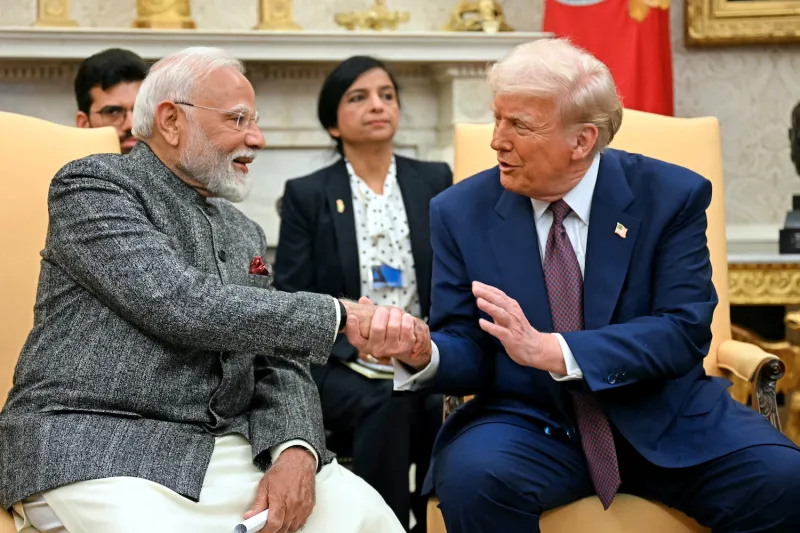
President Trump broke the news on Truth Social on February 2, 2026, framing the deal as a gesture of “friendship and respect” for PM Modi. He announced an immediate reduction in US tariffs on Indian goods from 25% (reciprocal) to 18%, while scrapping the additional 25% penalty linked to India’s Russian oil buys. In return, Trump claimed India would halt Russian oil purchases, reduce its own tariffs and non-tariff barriers to zero on US goods, and commit to buying over $500 billion in American energy, technology, agriculture, coal, and other products. He also mentioned potential Venezuelan oil as an alternative, emphasizing a stronger US-India relationship amid global trade wars.
Trump positioned the deal as a win for US farmers and manufacturers, aligning with his “Buy American” ethos.

What the US Agriculture Secretary Said
US Secretary of Agriculture Brooke Rollins hailed the deal as a boon for American farmers. In a post on X, she stated that it would “export more American farm products to India’s massive market, lifting prices, and pumping cash into rural America.” She highlighted the 2024 US agricultural trade deficit with India at $1.3 billion, noting that India’s growing population makes it a key market for US goods like tree nuts, fruits, vegetables, wine, and spirits. Rollins thanked Trump for “delivering” on promises to rural America, underscoring limited but strategic access to India’s protected farm sector.
What Narendra Modi Said
PM Modi responded positively on X, expressing delight over the reduced 18% tariff on “Made in India” products and thanking Trump on behalf of 1.4 billion Indians. He described the deal as unlocking “immense opportunities for mutually beneficial cooperation” between the world’s largest democracies, praising Trump’s leadership for global peace and prosperity. Notably, Modi did not confirm specifics like halting Russian oil or the $500 billion commitment, focusing instead on the tariff cut’s benefits for Indian exports.
Indian Commerce Minister Piyush Goyal later clarified that sensitive sectors like agriculture and dairy are protected, calling it the “best deal” compared to neighbors.
What the Opposition Is Saying
India’s opposition has been vocal, demanding transparency and parliamentary debate. Congress leader Rahul Gandhi accused Modi of “compromising” and “selling the country’s hard-earned progress.” Parties like Congress disrupted Lok Sabha proceedings, raising alarms over agriculture: They fear US farm imports could flood the market, hurting Indian farmers who employ a large portion of the population. Opposition figures like Manish Tewari questioned the deal’s impact on farmers’ interests, while others labeled it “Huglomacy” – a surrender to Trump without safeguarding sovereignty. Concerns also extend to energy security, with calls for clarity on Russian oil cessation and its geopolitical fallout.
Agreement Still Shrouded in Mystery
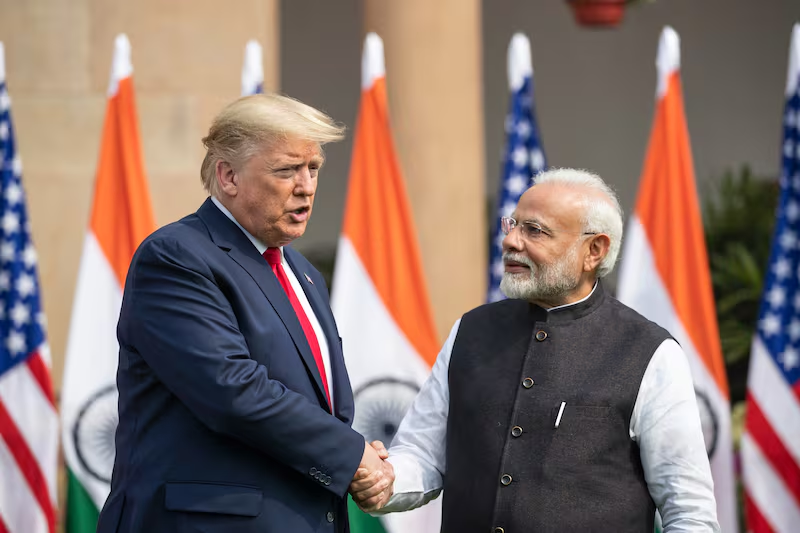
As of February 4, 2026, the full agreement text remains unpublished, with officials indicating a joint statement may follow soon. This opacity has fueled speculation, but early signs point to gains for Indian exporters in labor-intensive sectors like textiles and engineering goods. Markets reacted positively, with the rupee and stocks rallying.
While the deal could strengthen strategic ties amid global uncertainties, its success hinges on implementation. For now, it represents a pragmatic reset – but one that demands vigilance on domestic impacts.