Modi Unveils ₹15,000 Crore Package for Nepal as Ties Reset
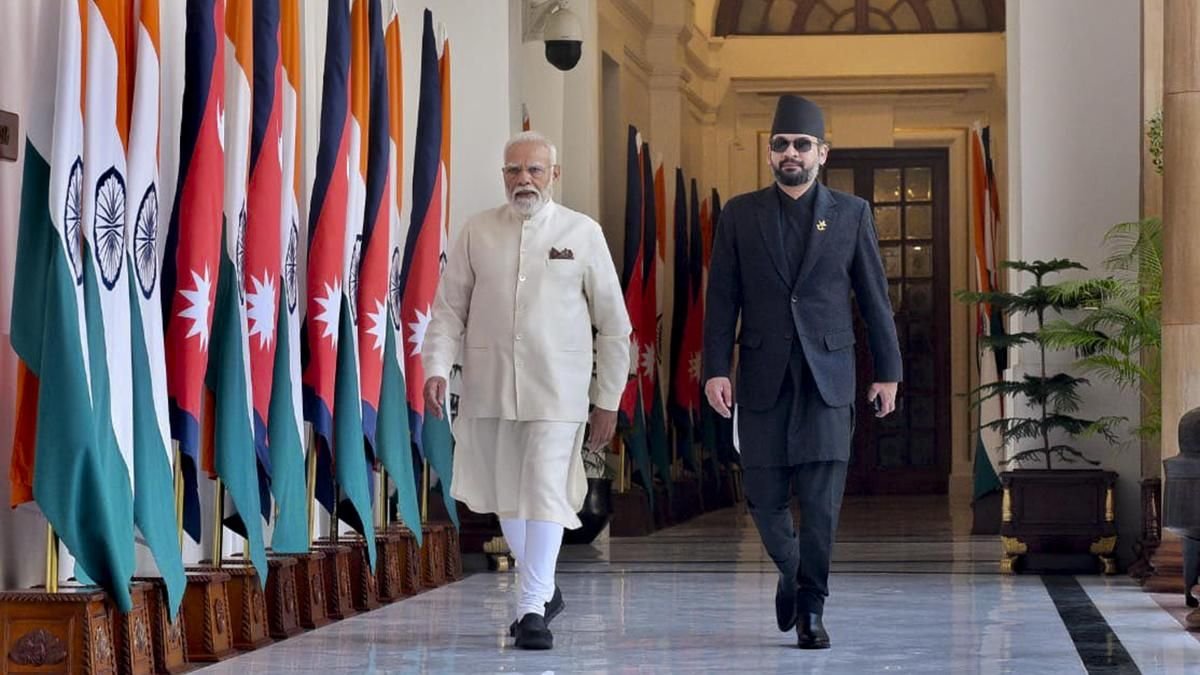
In a significant reset of bilateral relations, Prime Minister Narendra Modi on Monday announced a major economic package worth 24,000 crore Nepalese rupees (approximately ₹15,000 crore) for Nepal and jointly flagged off a new cross-border passenger train service with his Nepalese counterpart, Balendra Shah. The two leaders also finalised a joint vision document and signed eight agreements to deepen cooperation across multiple sectors, marking a fresh chapter after a period of strain linked to boundary issues.
Shah, who arrived in India on Sunday (November 22), is on his first bilateral foreign visit since assuming office on 27th March, 2026. The visit underscores the enduring “Neighbourhood First” priority in India’s foreign policy and Nepal’s emphasis on pragmatic engagement with its southern neighbour.
Shah’s first international engagement as prime minister was leading Nepal’s delegation to the 81st United Nations General Assembly in New York in September 2026. His two-day state visit to India (22–23 November 2026), undertaken at the invitation of Prime Minister Modi, is his first bilateral foreign visit.
Key Outcomes of the Talks
The wide-ranging discussions produced concrete deliverables:
- Development Package: India will extend assistance of NPR 24,000 crore (₹15,000 crore). This includes grant assistance of NPR 5,600 crore (₹3,500 crore) for post-disaster reconstruction (following the severe floods of August 2026) and new infrastructure projects, plus a rupee-denominated Line of Credit of NPR 18,400 crore (₹11,500 crore) for energy-sector projects.
- Connectivity and Transport: The leaders flagged off the inaugural Sarayu-Kamala Express rail service linking Ayodhya in Uttar Pradesh with Janakpur in Nepal, expected to boost religious and cultural tourism along the Ramayana Circuit. A new motorable bridge between Dharchula (India) and Darchula (Nepal) was inaugurated. Foundation stones were laid or progress was welcomed for Integrated Check Posts (ICPs) at Banbasa and other locations, a petroleum terminal in Jhapa, and related pipelines. Nepal gained additional transit access through Deendayal Port (Kandla, Gujarat), with Paradip Port in Odisha also to be made available.
- Energy and Hydropower: Foundation was laid for the 669-megawatt Lower Arun Hydro-Electric Project. Both sides expressed satisfaction with progress on hydropower cooperation and committed to the timely completion of ongoing projects and the long-term power trade agreement. The active engagement of Indian companies in Nepal’s hydropower sector was welcomed.
- Vision Document and Agreements: The leaders adopted the vision document titled Viksit Bharat and Samunnat Nepal: Re-imagining the Partnership. Eight pacts/MoUs were signed covering forensic sciences, health, sustainable urban development, fisheries, space technology, capacity building, and other areas. Discussions also covered start-ups, digital services, space cooperation, climate resilience, disaster mitigation, sports, and people-to-people linkages.
- Boundary and Institutional Mechanisms: The two sides directed their foreign secretaries to work on outstanding boundary issues. India reiterated that boundary matters with Nepal would be resolved bilaterally through the established mechanism, without third-party involvement. Both countries have an open border and share deep cultural and people-to-people ties often described as “as firm as the Himalayas and as vast as the oceans.”
Nepal also invited Prime Minister Modi to visit the country. The leaders agreed to explore further cooperation on gas pipelines, an offshore IIT campus in Nepal (discussions have begun with IIT Kanpur), and additional educational and innovation initiatives aimed at Nepal’s youth.
Significance
The visit and outcomes signal a deliberate effort to place the relationship on a more forward-looking, development-centric footing after recent tensions. For Shah’s government, elected on a platform of change and accountability, the engagement with India offers tangible support for reconstruction, energy security, connectivity, and youth-focused opportunities. For India, it reinforces strategic and economic engagement with a key Himalayan neighbour amid regional flux.
Both sides emphasised shared civilisational bonds, mutual trust, and the principle of being first responders for each other in times of difficulty. The package and projects are expected to support Nepal’s recovery from recent natural disasters while advancing long-term infrastructure and energy goals that benefit both countries.
The developments mark an important moment in India–Nepal relations under a new generation of leadership in Kathmandu.