NDA Secures Majority in MLC Polls Across Four States
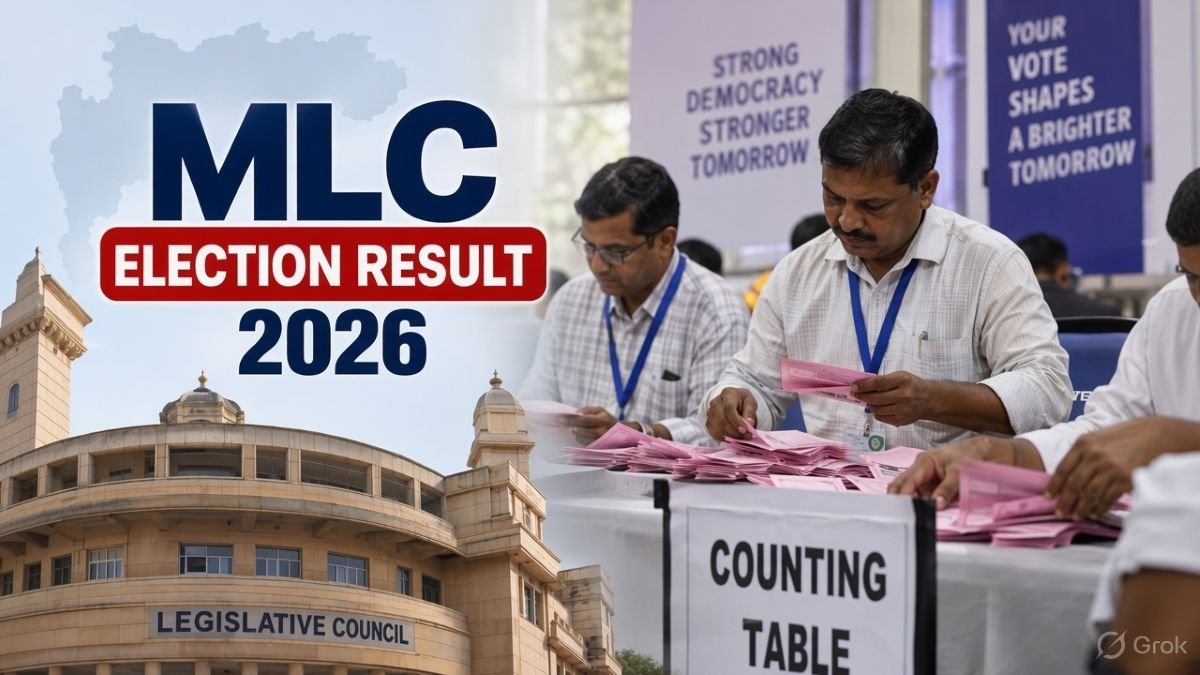
The Bharatiya Janata Party and its National Democratic Alliance partners emerged as the clear winners in the biennial Legislative Council elections held on October 23, capturing around 16 of the 28 seats that went to the polls in Uttar Pradesh, Bihar, Maharashtra and Karnataka. Results, declared over the past two days, showed the Congress party struggling to open its account in most states, managing only a solitary win in Maharashtra.
The elections covered mainly graduates’ and teachers’ constituencies, 11 seats in Uttar Pradesh, 8 in Bihar, 5 in Maharashtra, and 4 in Karnataka. Voting was conducted through paper ballots using the single transferable vote system.
In Uttar Pradesh, the BJP retained a strong position by winning six seats. The Samajwadi Party put up a spirited performance, securing five seats, including notable victories in Varanasi-area constituencies. An Independent candidate also featured among the winners, with some reports indicating the candidate later joined the BJP.
Karnataka delivered a clean sweep for the BJP–Janata Dal (Secular) alliance. The BJP took three seats while the JD(S) secured one. The ruling Congress failed to win any of the four seats, marking a significant setback for the party in the state.
Bihar produced a mixed verdict. The BJP and its allies, including the Janata Dal (United), claimed 4 seats. The Rashtriya Janata Dal won the Patna Teachers’ constituency, while Prashant Kishor’s Jan Suraaj Party opened its account in the Legislative Council by capturing the Darbhanga Teachers’ seat. Independents also won 2 seats, and several sitting MLCs lost their elections.
In Maharashtra, the contest between the ruling Mahayuti alliance (led by the BJP and including the Shiv Sena) and the opposition Maha Vikas Aghadi (including the NCP-Sharadchandra Pawar faction) was closely fought. The opposition Maha Vikas Aghadi won 3; the ruling Mahayuti won 2 seats. The Congress retained the Nagpur Graduates’ constituency in a notable upset.
While exact final tallies varied slightly across reports as counting of preferential votes concluded in tight contests, the overall picture was one of NDA strength, Congress struggles, particularly in Karnataka, gains for the Samajwadi Party in Uttar Pradesh, and the debut of newer political forces Jan Suraaj in Bihar.
These biennial elections do not dramatically alter the balance of power in the permanent Legislative Councils. However, they are being closely watched as political indicators ahead of larger Assembly elections in several states. Official results and notifications from the Election Commission of India remain the definitive record for seat-by-seat outcomes.
Summary
| State | Seats Contested | Major Result | Political Significance |
| Uttar Pradesh | 11 | BJP won 6 seats, and Samajwadi Party won 5 | The BJP retained an overall advantage, while the SP made important gains. |
| Bihar | 8 | BJP won 3; JD(U), RJD and Jan Suraaj won 1 each; Independents won 2 | Jan Suraaj secured its first Legislative Council seat. |
| Karnataka | 4 | BJP won 3 and JD(S) won 1 | The BJP–JD(S) alliance won all four seats. |
| Maharashtra | 5 | The opposition Maha Vikas Aghadi won 3; the ruling Mahayuti won 2 | Congress retained the Nagpur graduates’ constituency, while opposition parties won other seats. |
| Total | 28 | Results across four states | The BJP and its allies secured a strong overall outcome. |
Frequently Asked Questions.
1. What Is an MLC Election?
MLC stands for Member of the Legislative Council.
An MLC election is an election to choose representatives for a state’s Legislative Council, the upper house of its state legislature.
India has two houses in its national Parliament:
- The Lok Sabha, or lower house.
- The Rajya Sabha, or upper house.
Similarly, some Indian states have two legislative chambers:
- The Legislative Assembly, whose members are called MLAs.
- The Legislative Council, whose members are called MLCs.
The Legislative Council provides an additional forum for discussing legislation, examining public policy and reviewing the work of the state government.
However, the Council’s powers are not identical to those of the Assembly. For example, the Legislative Council cannot permanently block a Money Bill passed by the Legislative Assembly.
Important: MLC elections are not the same as MLA elections. In an ordinary Assembly election, eligible adult citizens vote in their constituencies. MLC elections use different electoral systems and voter groups, depending on the type of Council seat being contested.
2. How Many Indian States Have MLC Elections?
As of October 2026, six states have Legislative Councils and therefore hold MLC elections.
Table 1: States Having Legislative Councils in India
| No. | State | Has a Legislative Council? | Total Council Seats |
| 1 | Andhra Pradesh | Yes | 58 |
| 2 | Bihar | Yes | 75 |
| 3 | Karnataka | Yes | 75 |
| 4 | Maharashtra | Yes | 78 |
| 5 | Telangana | Yes | 40 |
| 6 | Uttar Pradesh | Yes | 100 |
| Total | 6 states | 426 |
Note: The table shows the commonly reported sanctioned strengths of the six Legislative Councils. Vacancies may mean that the number of serving members is lower than the sanctioned strength. Council membership also includes nominated members, not just members elected in public-facing MLC polls.
Why Do Only Six States Have Legislative Councils?
The Indian Constitution does not require every state to have a Legislative Council.
Under Article 169, Parliament can create or abolish a state’s Legislative Council by legislation, provided that the state’s Legislative Assembly first passes a resolution supporting the change by the constitutionally required majority.
A Legislative Council is therefore optional. States may consider their administrative needs, political circumstances, legislative workload and the costs of maintaining a second chamber when deciding whether to establish one.
3. Number of MLC Seats in Each State
The number of MLC seats differs from state to state. Uttar Pradesh has the largest Legislative Council, while Telangana has the smallest among the six states.
Table 2: State-Wise Legislative Council Strength
| State | Number of MLC Seats | Position |
| Uttar Pradesh | 100 | Largest Legislative Council |
| Maharashtra | 78 | Second largest |
| Bihar | 75 | Joint third largest |
| Karnataka | 75 | Joint third largest |
| Andhra Pradesh | 58 | Fifth largest |
| Telangana | 40 | Smallest Legislative Council |
| Total | 426 | Across six states |
Article 171 of the Constitution establishes the general framework for the composition of the Legislative Council. A Council ordinarily cannot have more than one-third of the membership of its state’s Legislative Assembly and cannot have fewer than 40 members. The Constitution also specifies the different categories through which members are elected or nominated.
4. How Are MLCs Elected?
MLCs are not all elected by the same group of voters. The Constitution provides for several categories of membership.
Under Article 171, the composition of a Legislative Council is broadly divided as follows.
Table 3: Categories of MLCs and Their Selection Methods
| Category | Approximate Share | Who Selects the Members? |
| Local-authority constituencies | One-third | Eligible elected representatives of specified local authorities |
| Graduates’ constituencies | One-twelfth | Registered eligible graduate voters |
| Teachers’ constituencies | One-twelfth | Registered eligible teachers |
| MLAs’ constituencies | One-third | Members of the State Legislative Assembly |
| Governor-nominated members | Remainder | Nominated by the Governor under constitutional provisions |
These proportions are approximate constitutional allocations, and the exact number of seats in each category depends on the relevant state’s legal allocation.
The system is designed to give different groups a voice in the state’s legislative process. In particular, graduates’ and teachers’ constituencies serve as designated electorates for people who meet specific educational or professional criteria.
MLC elections generally use proportional representation through the single transferable vote, where applicable. Voters rank candidates according to their preferences rather than simply casting a vote for only one candidate.
5. Eligibility Criteria for MLC Candidates
A person cannot contest an MLC election simply because they wish to become a member of the Legislative Council. They must satisfy constitutional and statutory requirements.
Table 4: Who Can Become an MLC?
| Requirement | Explanation |
| Citizenship | The candidate must be an Indian citizen. |
| Minimum age | The candidate must be at least 30 years old. |
| Voter registration | The candidate must satisfy the applicable electoral registration requirements. |
| Legal qualifications | The candidate must meet the requirements of the Constitution and applicable election laws. |
| Disqualifications | The candidate must not be disqualified under applicable law, including relevant provisions concerning certain convictions, offices of profit or other statutory grounds. |
| Nomination procedure | The candidate must file nomination papers and satisfy the applicable procedural requirements. |
The minimum age for a Legislative Council candidate is 30 years, compared with 25 years for a candidate contesting a Legislative Assembly election.
Additional requirements may differ depending on the type of constituency and the applicable election laws. Candidates should check the official election notification for the particular state and seat before filing their nominations.
Can an Ordinary Person Become an MLC?
Yes. An ordinary citizen can contest an MLC election if they satisfy the applicable eligibility conditions and are nominated in accordance with the relevant rules.
A candidate does not necessarily have to be a sitting MLA. Some MLCs are elected by local-authority representatives, registered graduates or teachers, while others are elected by MLAs. Some members are nominated by the Governor.
The route to membership therefore depends on the seat being contested.
6. Eligibility Criteria for Voters in MLC Elections
One of the most important features of MLC elections is that not every adult citizen can vote in every MLC constituency.
Voter eligibility depends on the category of seat.
Table 5: Who Can Vote in MLC Elections?
| Type of Constituency | Who Can Vote? | Main Eligibility Principle |
| Local-authority constituency | Eligible members of specified local authorities | The person must belong to the relevant electoral college. |
| Graduates’ constituency | Registered voters who satisfy the applicable graduate qualifications | The Constitution specifies a minimum three-year period of graduate status or equivalent prescribed qualifications. |
| Teachers’ constituency | Registered eligible teachers | The Constitution specifies at least three years of teaching in qualifying educational institutions. |
| MLAs’ constituency | Members of the State Legislative Assembly | Voting is restricted to eligible Assembly members. |
| Governor-nominated seats | No public election for these seats | Members are nominated under constitutional provisions. |
Important distinction: Being a graduate or a teacher does not automatically make a person eligible to vote in an MLC election. The person must satisfy the applicable requirements and be registered in the relevant electoral roll.
The exact documents, registration procedures and deadlines depend on the constituency and election notification.