The India AI Impact Summit 2026: Grand Ambitions, Robot Dogs, Traffic Chaos, and What It Really Revealed About India’s AI Journey
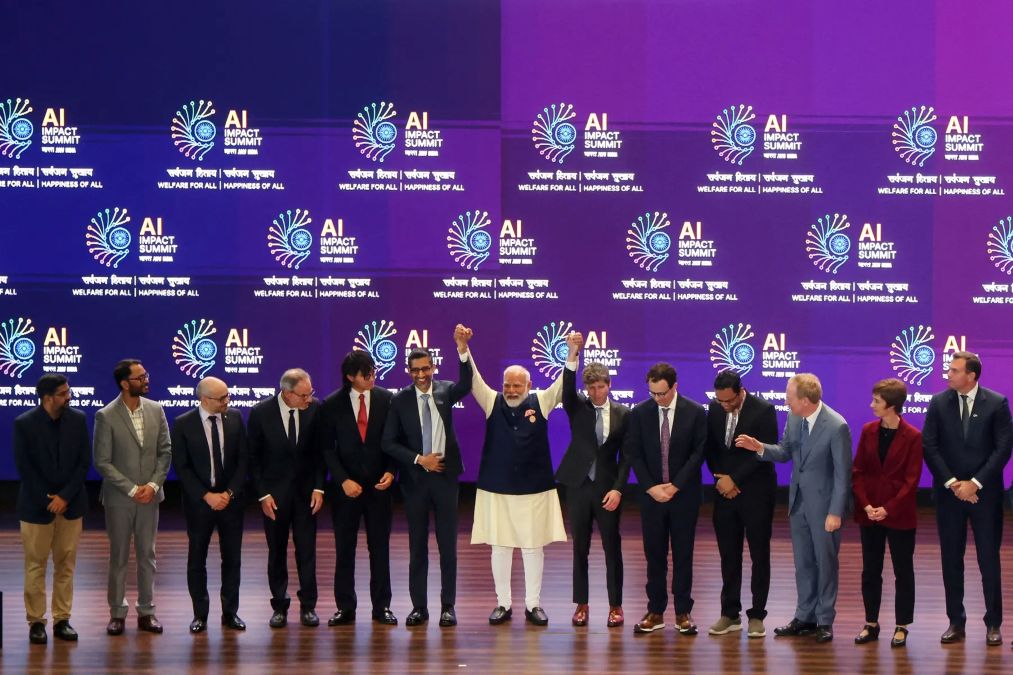
From February 16 to 20, 2026, New Delhi’s Bharat Mandapam hosted the India AI Impact Summit 2026, India’s ambitious bid to position itself as a global leader in responsible, inclusive AI. Billed as the first major AI forum in the Global South, the event aimed to shift from “dialogue to demonstrable impact” under the themes of People, Planet, and Progress (or “Sutras” and “Chakras” in the government’s Sanskrit-infused branding).
Organizer
The summit was hosted by the Government of India under the IndiaAI Mission, which is overseen by the Ministry of Electronics and Information Technology (MeitY). It featured heavy involvement from NITI Aayog, Startup India, and other arms of the state, with partnerships for side events with DPIIT, MY Bharat, and institutions such as Shri Ram College of Commerce. The massive expo brought together 300+ exhibitors from India and 30+ countries across 10+ thematic pavilions. PM Narendra Modi delivered a high-profile address, pitching “Design and develop in India. Deliver to the world.”
Star-Studded Lineup: Who Attended?
The guest list was glittering:
- Prime Minister Narendra Modi
- French President Emmanuel Macron
- UN Secretary-General Antonio Guterres
- Google & Alphabet CEO Sundar Pichai
- OpenAI CEO Sam Altman
- Anthropic CEO Dario Amodei
- Microsoft President Brad Smith
- Reliance’s Mukesh Ambani, Wipro’s Rishad Premji, Infosys’ Nandan Nilekani, and dozens of other Indian industry titans
- Global AI heavyweights like Google DeepMind’s Demis Hassabis, Meta’s Alexandr Wang, and more
(Former UK PM Rishi Sunak also made an appearance and even cracked a joke about Delhi traffic.) Bill Gates was scheduled to give a keynote but pulled out at the last minute amid renewed scrutiny over Epstein, with his foundation citing a desire to “keep the focus on the summit’s key priorities.” Jensen Huang of Nvidia reportedly followed suit.
It was meant to be India’s moment to shine on the world stage.
The Traffic Debacle
Delhi’s infamous traffic turned the summit into a logistical nightmare. VIP road closures for dignitaries caused gridlock, stranding delegates for hours. No adequate shuttles, taxis vanishing, and some people reportedly walking 5 km.
The most viral story? Sara Hooker, co-founder and CEO of US-based Adaption Labs (a respected AI researcher), had an invite to PM Modi’s exclusive gala dinner. After changing into formal attire, she spent four hours stuck in traffic trying to return to Bharat Mandapam. She eventually gave up, headed back to her hotel, and ordered room service at 11 pm. Her X post went viral: “Would have been honoured to attend. But after 4h in traffic was equally honored to sit down to really excellent room service at 11 pm.”
Rishi Sunak arrived late to one session and quipped, “AI can do many things… but it can’t yet fix Delhi’s traffic.” Attendees complained of chaos, overcrowding, poor signage, and even allegations of theft in some reports.
The Galgotias University Episode: The Viral Embarrassment
The real show-stopper came from Galgotias University (Greater Noida). At their expo stall, communications professor Neha Singh told DD News that a four-legged robot named “Orion” — capable of surveillance and advanced mobility, had been “developed by the Centre of Excellence at Galgotias University.” She called it a proud moment for the private university, which claimed to have invested over ₹350 crore in AI.
Within hours, the internet identified it as the Unitree Go2, a commercially available Chinese robotic dog from Unitree Robotics, priced at around $2,200–$2,800 and widely sold online.
MeitY swiftly directed the university to vacate its stall on February 18–19. Galgotias later clarified it was “for student learning purposes,” blamed the “ill-informed” professor, deleted posts, and issued apologies. Students reported being trolled mercilessly, relatives joking about “Chinese degrees,” and peers laughing at them.
Wipro Joins the (Same) Robot Party
Adding delicious irony: Wipro showcased the exact same Unitree Go2 robot (branded “TJ” in their demo) at their pavilion. Their representative highlighted its use in high-risk scenarios but did not claim it was developed in-house, unlike Galgotias. Still, the optics were perfect fodder for trolls: “Even after the scandal, corporate India is using the same imported Chinese bot.”
The Trolling, IITs Memes, and Social Media Roast
Social media exploded. Memes flooded X, Instagram, and Reddit:
- “GALGOTIA Rocket Catcher” (satirical Indian innovation)
- Comparisons to school science projects
- “Urban Maxwell” jabs at the university founder
- Viral clips of the robot trotting around while netizens screamed “Made in China!”
A recurring theme: “Even IITs and IISc, who actually work on real robotics and AI, aren’t showboating fake breakthroughs at the national summit. Why this desperation?” The contrast painted Galgotias as emblematic of hype over substance in parts of India’s private education sector. Students bore the brunt, with the university’s credibility taking a massive hit.
What It Exposed About India
The India AI Impact Summit 2026 was a mirror. It showed:
India’s AI story is real and accelerating (homegrown models, massive developer talent, policy push). But moments like this remind us that perception management can’t substitute for execution.
The robot dog didn’t bark; it bit the narrative. Let’s hope future summits focus less on imported pets and more on homegrown breakthroughs.
wish you all the best