Belgian Physicist Francis Halzen Wins 2026 Nobel Prize in Physics for Unlocking the Secrets of “Ghost Particles”
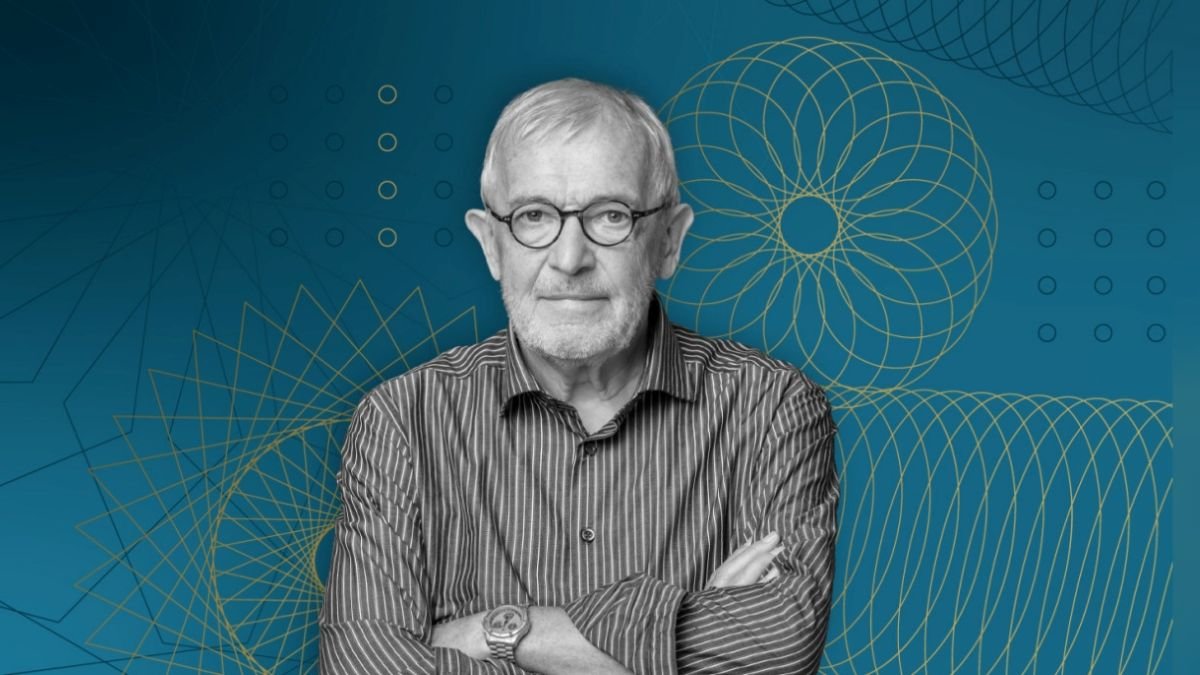
In a landmark moment for science and for Belgium, Belgian born physicist Francis Halzen has been awarded the 2026 Nobel Prize in Physics. The Royal Swedish Academy of Sciences announced the honour on October 6, 2026, recognising Halzen “for decisive contributions to the IceCube Neutrino Observatory and the discovery of high-energy neutrinos of astrophysical origin.”
At 82, Halzen becomes only the second Belgian ever to win the Nobel Prize in Physics, following François Englert’s shared 2013 award for work on the Higgs mechanism and one of a select group of Belgian Nobel laureates overall.
Who Is Francis Halzen?
Born on March 23, 1944, in Tienen (Flemish Brabant), Belgium, Halzen studied physics and mathematics at KU Leuven (then the Catholic University of Leuven). He earned his PhD in theoretical physics there in 1969 and briefly worked at CERN before joining the University of Wisconsin, Madison, in 1972. He has remained there ever since, rising to become a distinguished professor and the longtime principal investigator of the IceCube project.
Though trained as a theorist, Halzen’s career took a bold turn into experimental particle astrophysics. In the late 1980s, he proposed a radical idea: turn the vast, ultra-clear ice of Antarctica into a giant neutrino detector.
Hunting the Universe’s Most Elusive Messengers
Neutrinos, often called “ghost particles”, are nearly massless, electrically neutral subatomic particles that interact so weakly with matter that trillions pass through your body every second without leaving a trace. High-energy neutrinos produced in the most violent cosmic events (exploding stars, black hole jets, and other extreme accelerators) travel across the universe almost undisturbed, carrying information that light and other particles cannot.
Halzen realized that when a rare neutrino collides with an atomic nucleus in Antarctic ice, it produces a faint flash of blue Cherenkov light. By burying thousands of sensitive light detectors deep in the ice, scientists could capture those flashes and reconstruct the neutrinos’ paths and energies.
His vision led first to the smaller AMANDA prototype and then to IceCube: a cubic-kilometre detector at the Amundsen–Scott South Pole Station. Construction finished in 2011. IceCube has since detected high-energy neutrinos originating far beyond our solar system and even identified their first sources, including active galaxies powered by supermassive black holes.
The Nobel Committee praised Halzen’s scientific leadership and tenacity, noting that he “led an international team of researchers and engineers who have provided us with a fantastic instrument” and opened “a new kind of astronomy.”
A Proud Moment for Belgium
Belgian Prime Minister Bart De Wever congratulated Halzen, calling the award “impressive recognition for a lifetime dedicated to shedding light on the great mysteries of the cosmos through its smallest components.” Belgian universities, including KU Leuven and Vrije Universiteit Brussel (whose researchers have long collaborated on IceCube), celebrated the news with pride.
Halzen himself reacted with characteristic modesty. Contacted by phone while attending a conference in Italy, he said he was “delighted” and “surprised,” and emphasized the many courageous colleagues who joined the project when few believed it would succeed.
Conclusion
IceCube has given humanity a new window on the universe. Neutrino astronomy complements traditional optical, radio, and gravitational-wave observations, revealing processes that were previously hidden. It is helping solve the century-old puzzle of the origin of high-energy cosmic rays and may yet uncover entirely new physics.
Francis Halzen’s journey from a small Belgian town to the frozen frontier of Antarctica and now to Stockholm is a powerful reminder that bold ideas, persistence, and international collaboration can rewrite our understanding of the cosmos. Belgium and the world of physics have every reason to celebrate.