Increase in Lok Sabha Seats in India: Delimitation 2026 Explained
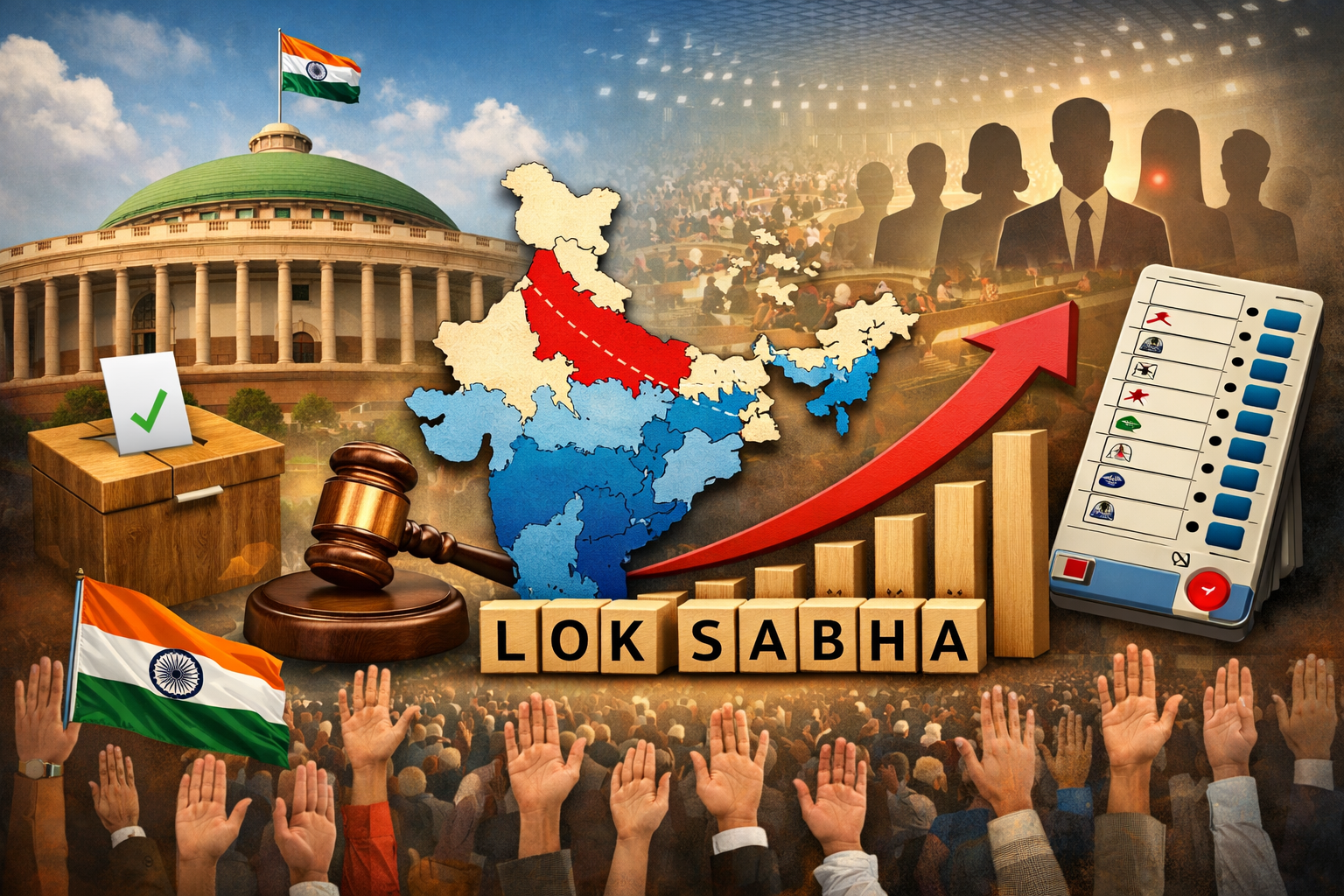
India is on the verge of one of the most significant electoral reforms in its democratic history—the increase in Lok Sabha seats through the delimitation process after 2026. This move is expected to reshape political representation, federal balance, and electoral dynamics nationwide. Let’s explore what delimitation is, why the number of seats is increasing, how different states will be affected, and the current status of the proposed changes.
What is Delimitation and Why is it Important?
Delimitation refers to the redrawing of parliamentary constituency boundaries and the reallocation of seats based on population changes. In India, this process is carried out by the Delimitation Commission of India.
Historically, delimitation was conducted after every census. However, the number of Lok Sabha seats was frozen in 1976 to encourage population control measures and avoid penalizing states that successfully reduced population growth. This freeze was extended until after the first census post-2026.
As a result, India has continued with 543 Lok Sabha seats for decades despite massive population growth.
Why Are Lok Sabha Seats Increasing Now?
India’s population has grown significantly since 1971, creating an imbalance in representation. Some constituencies today represent far more people than others. To address this, the government is planning to:
- Conduct a new census
- Carry out delimitation
- Increase the total number of seats
Recent reports suggest that the Lok Sabha may expand from 543 seats to around 750–850 seats, depending on the final framework.
This expansion aims to ensure fairer representation and better governance in the world’s largest democracy.
State-Wise Expected Increase in Lok Sabha Seats
The increase will not be uniform. It will largely depend on population growth trends, which means northern states may gain more seats than southern states.
Major Expected Changes
- Uttar Pradesh: 80 → 128 seats
- Bihar: 40 → 70 seats
- Madhya Pradesh: 29 → 47 seats
- Rajasthan: 25 → 44 seats
- Maharashtra: 48 → 68 seats
Southern States (Moderate Increase)
- Karnataka: 28 → 36 seats
- Andhra Pradesh: 25 → 28 seats
- Telangana: 17 → 20 seats
- Tamil Nadu: 39 → 41 seats
- Kerala: 20 → 19 seats (possible decrease)
Other Insights
- Southern states may see limited growth due to population control success
- Some smaller states and Union Territories may see no increase at all .
Additionally, recent statements suggest that the total number of southern states’ seats could increase from 129 to 195, though their overall share may change only slightly.
Major Political Debate: North vs South Divide
One of the biggest concerns surrounding delimitation is the imbalance between northern and southern states.
- Northern states like Uttar Pradesh and Bihar have higher population growth, so they gain more seats
- Southern states fear losing political influence despite better population control
This has triggered debates on federal fairness and representation equity, with several leaders demanding alternative formulas instead of pure population-based allocation.
Link with the Women’s Reservation Bill
The increase in Lok Sabha seats is closely linked to the Women’s Reservation framework. The government has proposed:
- 33% reservation for women in Lok Sabha
- Implementation after delimitation
- Estimated 270+ women MPs in future
However, opposition parties argue that reservations should not be delayed due to delimitation and demand immediate implementation.
Current Status: Draft or Tabled?
As of April 2026:
- The government has initiated discussions and introduced proposals in Parliament
- A Special Session of Parliament (April 2026) has been convened to debate delimitation and related reforms
- The proposal is not yet fully implemented
- It is effectively in the proposal and legislative debate stage, not finalized as law
Some key points about the current status:
- It may require a constitutional amendment
- Needs approval by Parliament and at least half of the state legislatures
- Final implementation depends on census data and the delimitation commission recommendations
Conclusion
The proposed increase in Lok Sabha seats marks a historic shift in India’s democratic structure. While it promises better representation and modernization of the electoral system, it also raises serious concerns about regional balance, political equity, and timing.
The coming years—especially after the 2026 census—will determine how India reshapes its parliamentary structure. Whether this reform strengthens democracy or deepens regional divides will depend on how fairly and transparently the delimitation process is executed.