
Justice Swarana Kanta Sharma and Contempt Proceedings Against AAP Leaders
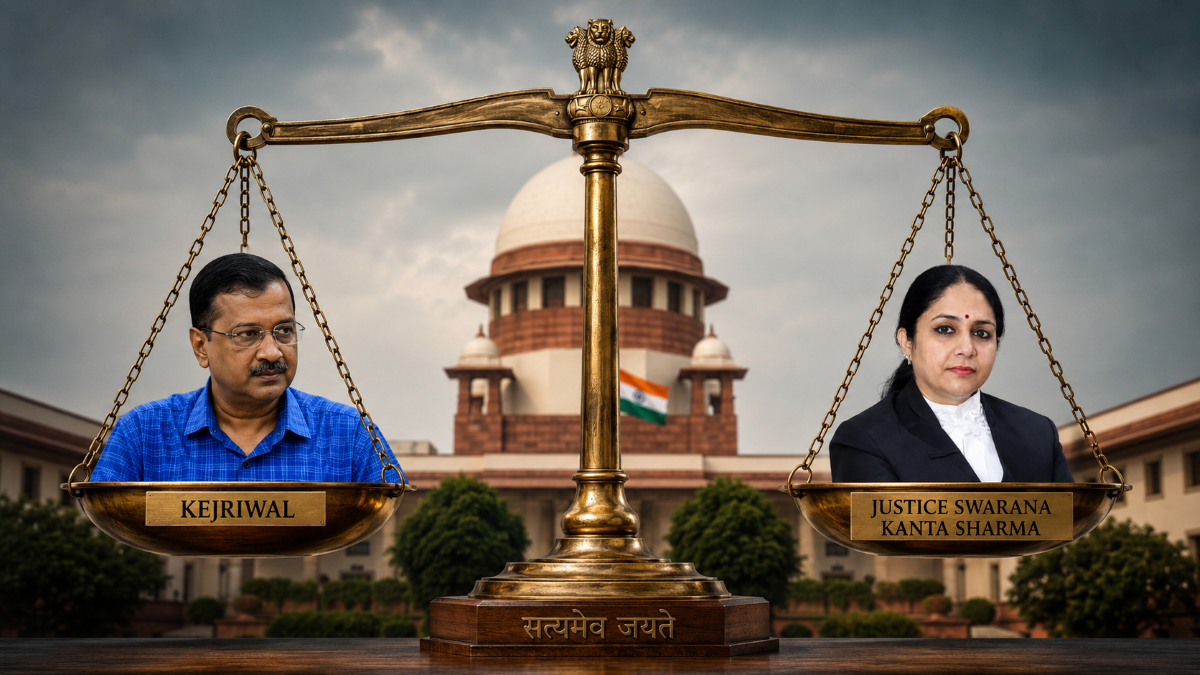
In a significant development on May 14, 2026, Justice Swarana Kanta Sharma of the Delhi High Court initiated criminal contempt proceedings against several top Aam Aadmi Party (AAP) leaders, including Arvind Kejriwal, Manish Sisodia, and others. At the same time, she recused herself from hearing the main Delhi Excise Policy case (liquor policy scam) involving these leaders.
This episode highlights ongoing tensions between political parties and the judiciary in India, raising critical questions about free speech, social media campaigns, judicial authority, and the limits of criticism directed at sitting judges.
The Delhi Excise Policy Case
The Delhi Excise Policy case revolves around alleged irregularities in the 2021-22 liquor policy formulated by the AAP government in Delhi. The policy was accused of favoring certain cartels in exchange for kickbacks. Key figures like former Deputy Chief Minister Manish Sisodia and AAP national convener Arvind Kejriwal have faced serious charges.
In February 2026, a trial court discharged all 23 accused, including Kejriwal and Sisodia, in the case. The Central Bureau of Investigation (CBI) challenged this discharge order before the Delhi High Court. Justice Swarana Kanta Sharma was assigned to hear the CBI’s revision petition.
AAP leaders, including Kejriwal, Sisodia, and Durgesh Pathak, sought the judge’s recusal on grounds of alleged bias. Justice Sharma rejected the recusal plea earlier (around April 2026). In response, some AAP leaders reportedly decided to boycott the proceedings and went legally unrepresented.
What Triggered the Contempt Action?
Justice Sharma took suo motu cognizance of what she described as a “coordinated social media campaign” involving highly defamatory, vilifying, and contemptuous posts and videos targeting her personally and the judiciary at large.
She specifically pointed to:
- Allegations that questioned the court’s integrity and impartiality.
- Edited videos and posts suggesting bias or external affiliations (including unverified claims about her speaking at certain events).
- Attempts to portray the court as biased and to pressure or intimidate the judiciary under the guise of free speech.
The judge named several individuals for initiating or participating in this campaign:
- Arvind Kejriwal
- Manish Sisodia
- Durgesh Pathak
- Sanjay Singh
- Vinay Mishra
- Saurabh Bharadwaj (Delhi AAP chief)
- And others
Justice Sharma firmly stated, “I refuse to be intimidated” and “I won’t be scared,” emphasizing that the judiciary cannot be bullied through social media campaigns. She described the content as “extremely vilifying, extremely contemptuous, and defamatory.”
The Court’s Decision
On May 14, 2026, during the hearing:
- Justice Sharma initiated criminal contempt proceedings against the named leaders.
- She clarified that a judge who initiates contempt proceedings in a matter cannot continue hearing the main case (to avoid any perception of bias).
- Accordingly, she recused herself from further hearing the CBI’s appeal in the excise policy case, which will now go to another bench.
- She will, however, continue to preside over the contempt proceedings.
The judge stressed that her recusal from the main case was purely procedural and not an admission of bias. She stood by her earlier orders rejecting recusal.
Reactions from AAP and Political Circles
AAP’s Response: The party and its leaders welcomed the recusal as a “victory of truth.” Arvind Kejriwal and others projected it as validation of their concerns, though they now face separate contempt charges.
Opposition (BJP and others): Critics accused AAP of running a systematic campaign to malign judges and undermine judicial institutions when decisions don’t go their way. They highlighted the need to protect the dignity of the courts.
Legal experts note that criminal contempt under the Contempt of Courts Act, 1971, applies when publications or acts scandalize the court or lower its authority. Social media has amplified such cases in recent years, leading to more frequent judicial responses.
Broader Implications
This case underscores several key issues in contemporary Indian democracy:
- Judicial Independence vs. Political Pressure: Judges increasingly face public campaigns. Justice Sharma’s firm response signals zero tolerance for intimidation.
- Social Media and Free Speech Limits: While criticism of judgments is protected, personal vilification or coordinated campaigns to influence outcomes cross the line into contempt.
- Recusal Politics: Frequent demands for recusal can become a tactic to forum-shop or delay proceedings. Courts must balance fairness with administrative efficiency.
- Accountability: The contempt proceedings will test whether the leaders can defend their statements as legitimate criticism or if they amount to punishable contempt.
Conclusion
As the contempt matter proceeds alongside the excise policy case before a new bench, all eyes will be on how the Delhi High Court balances accountability for alleged vilification with the right to fair criticism. In an era of hyper-connected politics and instant social media outrage, this episode serves as a reminder that the majesty of the judiciary remains a cornerstone of democracy,one that must be fiercely protected.