
The U.S. Restores Pacific Command
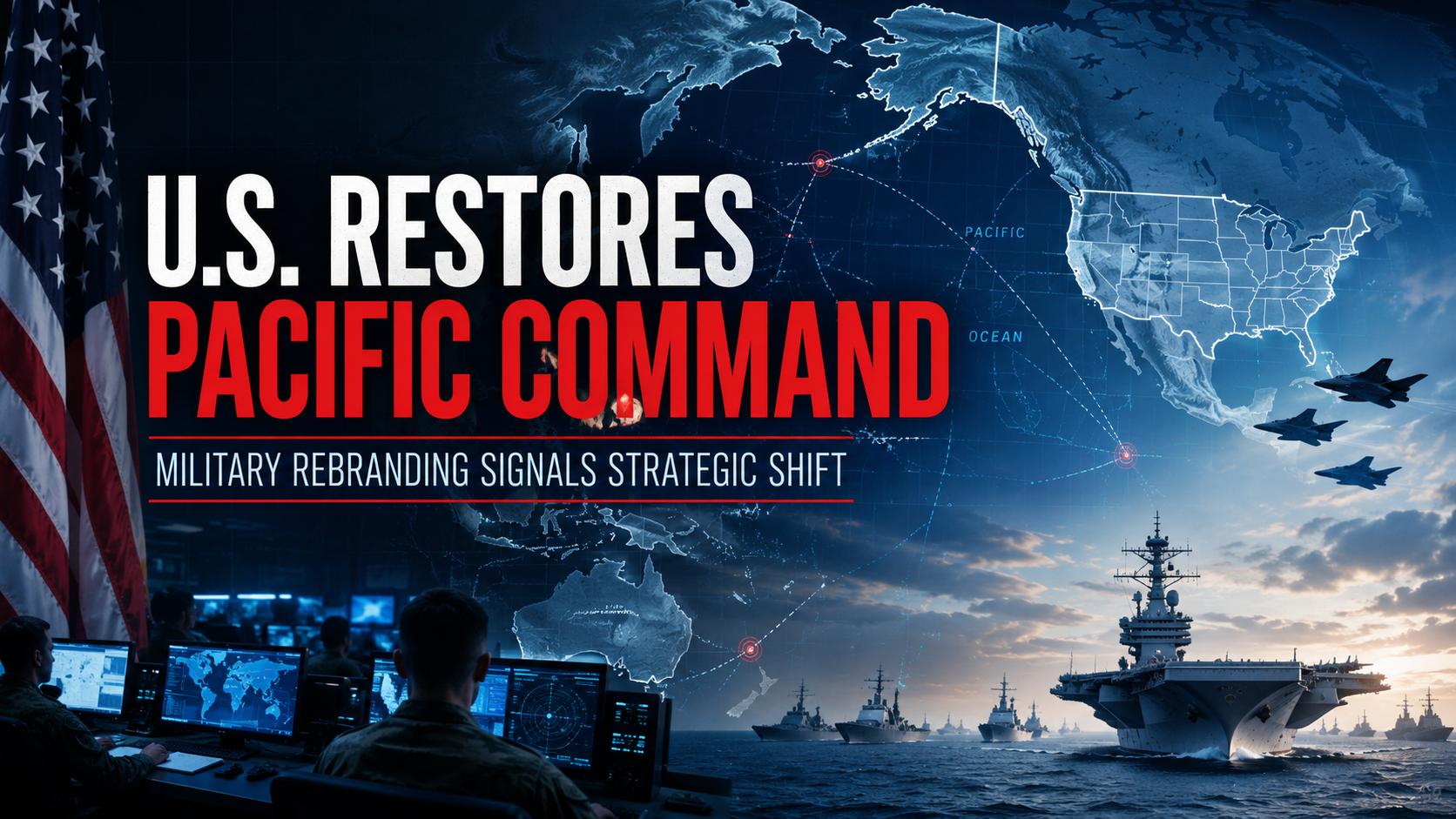
On June 16, 2026, the U.S. Department of War (formerly known as the Department of Defense in this context) announced a significant nomenclature change: the U.S. Indo-Pacific Command (USINDOPACOM) is reverting to its original name, the U.S. Pacific Command (USPACOM). This reverses the 2018 rebranding under the first Trump administration, which had added “Indo-” to emphasize the strategic linkage between the Indian and Pacific Oceans and India’s rising role.
What Exactly Is This Change?
The U.S. Pacific Command, originally established in 1947 by President Harry S. Truman, was the oldest and largest unified combatant command of the U.S. military. It oversaw a vast area covering about 100 million square miles, from the U.S. West Coast to India’s western borders.
In 2018, it was renamed Indo-Pacific Command to reflect evolving U.S. strategy amid China’s growing assertiveness. The “Indo-” prefix symbolically integrated the Indian Ocean region, highlighting partnerships with India and a broader “free and open Indo-Pacific” vision. This aligned with initiatives like the Quad (Quadrilateral Security Dialogue involving the U.S., India, Japan, and Australia).
The 2026 restoration is described by U.S. officials as purely administrative and symbolic, honouring historical legacy, boosting morale among personnel, and fostering pride without altering the command’s geographic responsibilities, missions, or operational focus. The area of responsibility remains unchanged, and commitments to allies and partners, including in the Indian Ocean, continue.
Why Does This Matter to India?
India views the Indo-Pacific framework as central to its own strategic outlook. The 2018 name change was seen as a diplomatic win, acknowledging India’s geographic and economic importance in the Indian Ocean and its role as a counterbalance to China. Removing “Indo” could be interpreted as a downgrade of that recognition, even if U.S. officials insist the operations are unaffected.
Key concerns for India include:
- Symbolic signaling: Names matter in geopolitics. Dropping “Indo” might suggest a U.S. pivot toward traditional Pacific allies (e.g., Japan, Australia, Philippines) or reduced emphasis on deeper integration with India.
- China context: With ongoing border tensions and maritime assertiveness in the Indian Ocean, India relies on a strong U.S. partnership for deterrence, intelligence sharing, technology, and joint exercises like Malabar.
Shashi Tharoor’s Reply on X
Congress MP and prominent opposition voice Shashi Tharoor quickly reacted on X (formerly Twitter), posting: “One more nail in the coffin of the Quad?” alongside a screenshot of the announcement.